|
Astronomy Picture of the Day |
| |
Astronomy Picture of the Day |
 APOD: 2026 September 26 – Mirrored Meteor and Milky Way
Explanation:
On August 15, this
perseid meteor
streaked through night
skies over the Observatorio del Roque de los Muchachos at
La Palma, Canary Islands, Spain.
The bright and colorful meteor trail was captured next to the central
Milky Way,
whose dark interstellar dust clouds and luminous starlight
reach above the horizon.
In the foreground of this tantalizing celestial scene is the 23 meter diameter
mirror of the prototype
Large-Sized Telescope
(LST-1).
LST-1 is
the first telescope constructed at the
northern hemisphere site of the innovative
Cherenkov Telescope Array Observatory.
With 198 hexagonal mirror segments and a
large, high-efficiency, pixelized camera,
LST-1 is designed to detect extremely brief,
atmospheric visible light flashes.
Lasting about a billionth of a second, the visible light
flashes are triggered by energetic gamma-rays
from cosmic sources such as
distant active galaxies
and gamma-ray bursts.
Of course, on that night some individual mirror segments
of LST-1 also reflected
the atmospheric flash of the bright perseid meteor.
 APOD: 2026 September 25 – Globular Star Cluster Omega Centauri
Explanation:
Globular star cluster
Omega Centauri
packs about 10 million
stars much older than the Sun into a volume some 150 light-years in
diameter.
Also known as NGC 5139, at a distance of 15,000 light-years
it's the largest and brightest of 200 or so known
globular clusters
that roam the halo of our Milky Way galaxy.
Though most star clusters consist of stars with the same age and
composition, the enigmatic Omega Cen exhibits the presence of
different
stellar populations with a spread of ages and chemical abundances.
In fact,
Omega Cen may be
the
remnant
core of a small galaxy merging with the Milky Way.
With a yellowish hue,
Omega Centauri's red giant stars are easy to pick out in this
sharp telescopic view.
A two-decade-long exploration of the dense star cluster
with the Hubble Space Telescope has revealed evidence
for a massive black hole near the
center
of Omega Centauri.
 APOD: 2026 September 23 – A New Lunar Crater: McGetchin
Explanation:
A once-in-a-lifetime crater has appeared on the Moon!
A comet or asteroid roughly the size of a
humpback whale
(approximately 10-20 meters, 30-60 feet) crashed into the Moon sometime
between April and May of 2024. The
Lunar Reconnaissance Orbiter
(LRO), with its
monthly monitoring of the Moon,
captured
today’s images
of the lunar surface before and after the event. The resulting crater,
named after Apollo-era lunar scientist
McGetchin,
is two soccer fields across. Craters of this size are only expected once
every 132 years!
Follow up thermal imaging
revealed a
large cold spot
that surrounds the warm crater. Surface impacts will puff up the loose lunar sediment, or
regolith,
making it less dense and harder to retain heat. This event affected an area
much larger than the visible crater,
which will inform humanity’s understanding of surface impacts and the evolution of the Moon’s surface.
It also reminds us all to be
thankful for Earth's atmosphere.
 APOD: 2026 September 22 – Chance Triple Alignment: Plane, Space Station, Sun
Explanation:
This shot captured an unexpected silhouette. Which is it?
It isn't the
sunspots,
the small dark regions caused by concentrated
magnetic fields
visible around the Sun's bright disk. Sunspots typically last
for weeks and were expected, since these spots were seen previously.
It isn’t the
International Space Station (ISS), the
small dark
structure on the middle left.
This is because the
featured picture was planned with
sub-second timing to record the
iconic structure passing before the
Sun.
It is the
airplane.
Just as
this exposure was taking place in June, from
Prasek in the
Czech Republic, an airplane began its own miniature
partial eclipse.
The result is this
triply aligned image of our Sun.
The photographer estimates that the chance of any
random
Sun image containing
silhouettes of both a space station and an airplane,
from that location, is about 30 million to one.
 APOD: 2026 September 21 – Cocoon Nebula Wide Field
Explanation:
When does a nebula look like a comet?
In this crowded starfield covering over two degrees within the
high-flying
constellation of the Swan
(Cygnus), the eye is drawn to the Cocoon Nebula.
A compact star forming region, the
cosmic Cocoon punctuates a nebula bright in
emission and
reflection on the lower right,
with a long trail of interstellar dust clouds to the left, making the entire complex appear a bit
like a comet.
Cataloged as
IC 5146,
the central bright head of the nebula spans about 10
light years, while the dark
dusty tail spans nearly 100 light years.
Both are located about 2,500 light years away.
A bright star near the colorful nebula's center likely
supplies power
and helps
clear out a cavity.
The long dusty filaments of the tail, although dark in this
visible light image, hide
stars in the process of
formation.
The
featured image was captured in July from
Death Valley,
California,
USA.
 APOD: 2026 September 20 – Analemma over the Callanish Stones
Explanation:
If you went outside at the same time every day and
took a picture that included
the Sun, how would the Sun's position change?
A visual answer to that question is an
analemma,
a composite image taken from the same spot at the
same time over the course of a year.
The featured analemma was composed from images
taken every few days at noon near the village of
Callanish in the
Outer Hebrides in
Scotland,
UK.
In the foreground are the
Callanish
Stones,
a stone circle built around 2700 BC during humanity's
Bronze Age.
It is not known if the placement of the
Callanish Stones has or had astronomical significance.
The ultimate causes for the
figure-8 shape of this and all analemmas are the
tilt of the Earth axis
and the
ellipticity of the
Earth's orbit
around the Sun.
At the solstices,
the Sun will appear at the top or bottom of an analemma.
The featured image was taken near the December solstice and so the Sun appears near the bottom.
Equinoxes, however,
correspond to analemma middle points -- not the
intersection point.
In two days there will be an
equinox ("equal night"),
when day and night are equal over all of planet Earth.
Many
cultures celebrate a change of season at an
equinox.
 APOD: 2026 September 19 – A Zodiacal Night
Explanation:
Also known as the false dawn,
a luminous band of zodiacal light is captured in this dark night skyscape.
The serene view was recorded just before
the beginning of astronomical
twilight
during September's star party at the remote
Hanle Dark Sky Reserve, Ladakh, India, planet Earth.
At about 4,500 meters altitude, the dark sky reserve
presents a haven
for hardy stargazing and astrophotography enthusiasts.
While meteors streak through the night, bright planet Jupiter
appears immersed in the faint zodiacal glow near the eastern horizon.
Follow the zodiacal band
toward the zenith to find open star cluster M44
and a yellowish tinged planet Mars near the center of the frame.
In fact,
serendipitous
detections of interplanetary dust by
NASA's Juno spacecraft suggest Mars itself is the source of dust
that back scatters sunlight and creates
zodiacal
light in planet Earth's night.
 APOD: 2026 September 17 - A Treasure Chest in the Carina Nebula
Explanation:
This treasure chest is full of stars.
The featured image was obtained with NASA's James Webb Space Telescope and shows a dust pillar in the Carina Nebula inside our Galaxy, roughly 7500 light-years away.
It is formed by interstellar gas and dust, and shaped by powerful stellar winds and radiation form neighboring stars like the nearby Eta Carinae stellar system which is more luminous than 5 million suns.
The star formation inside the pillar is excavating its head, creating the open lid of the chest.
Astronomers estimate that there are about 70 stars in a compact cluster inside the pillar.
This cluster is now thought to be only around 1.3 million years old.
Its bounty of young stars includes a massive star approximately 19 times as massive as the Sun.
More massive stars are rarer, shine brighter and evolve faster than less massive stars.
They are the shiniest jewels in the treasure chest.
 APOD: 2026 September 15 – A Daytime Eclipse: Moon Occults Venus
Explanation:
There was something behind the clouds.
Upon close inspection, it was the
Moon,
which was hard to see yesterday around noon above the small village of
Cessy,
France.
But soon, it was not only
the Moon.
As expected, a bright dot suddenly appeared from behind the Moon --
the planet
Venus far in the distance.
Captured in the single
featured exposure, both appeared to show a
crescent phase.
The Moon's
crescent was quite slight --
with only about 10 percent of its face illuminated by
the Sun.
In contrast,
Venus's crescent was more full --
showing about 25 percent illumination.
Venus appeared brighter because it is nearer the Sun and because its
clouds are more reflective than the
dark lunar surface.
An occultation of
Venus by the Moon is visible
to only about 10 percent of
the Earth,
but in yesterday's event even most of that was experiencing
daytime.
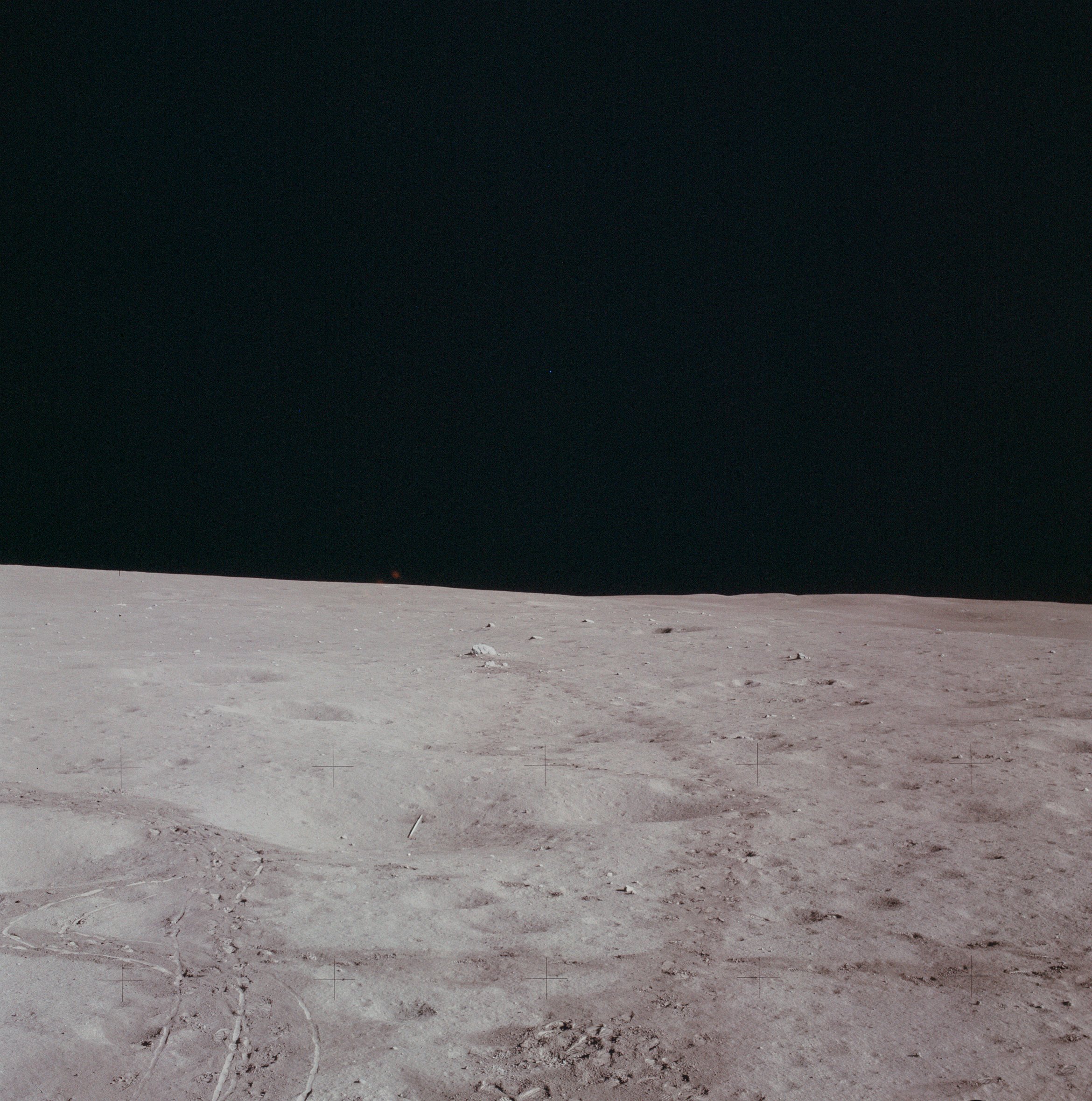
 APOD: 2026 September 12 – Apollo 11: Catching Some Sun
Explanation:
Bright sunlight glints as long dark shadows mark this image of the
surface of the Moon.
It was taken on
July 20, 1969,
by Apollo 11 astronaut
Neil Armstrong,
the first to walk on the lunar surface.
Pictured
is the mission's lunar module, the Eagle,
and spacesuited lunar module pilot Buzz Aldrin.
Aldrin is unfurling a long sheet of foil also known as the
Solar Wind Composition Experiment.
Exposed facing the Sun, the foil trapped particles streaming
outward in the solar wind,
catching a sample of
material
from the Sun itself.
Along with 22 kilograms of
moon rocks and lunar soil
samples, the solar wind collector was
returned for analysis
in earthbound laboratories.
 APOD: 2026 September 10 - LDN 1295: The Giraffe Nebula
Explanation:
What does this image look like to you?
Many see a giraffe facing right, with neck stretched high and long legs mid-stride (but some may see a squirrel instead).
The featured image shows LDN 1295, also called the Giraffe Nebula, in the constellation of the mythical queen of Aethiopia (Cassiopeia).
It is an object in the Lynds Catalogue of Dark Nebulas, compiled in 1962 by American astronomer Beverly Lynds, a pioneer for women in astronomy and astrophysics.
Dark nebulas are interstellar clouds of dust and gas that block the visible light of the stars behind them.
These nebulas are often faint and challenging targets for astrophotographers.
Why do we see animal shapes and faces in nebulas, clouds, and pretty much everywhere?
It is due to pareidolia, our tendency to look for familiar patterns.
Pareidolia may provide animals with an evolutionary advantage, for example in identifying (and avoiding) predators.
 APOD: 2026 September 8 – Hubble: Decagon Around Saturns South Pole
Explanation:
Why are Saturn’s poles geometric?
Saturn’s
North Pole has been known to be surrounded by a
hexagonal (6 sides) cloud since
discovery in 1987 in data taken by NASA’s
Voyager spacecrafts,
which quickly flew past the
ringed world in the early 1980s.
Now, recent observations of Saturn by the
Hubble Space Telescope
reveal a slightly different geometric cloud pattern
around the South Pole: a
decagon (10
sides).
The geometric boundaries are
possibly caused
by waves when the fast-moving gas away from the
poles interacts with slower-moving gas closer to the poles.
In the
featured image composite by the Hubble taken last year, the
South Pole of Saturn
is marked by an X and surrounded by bands of circulating clouds.
The decagon appears most prominent in the dark inner regions.
The northern hexagon has proven stable for over 40 years, while the stability of the southern decagon will surely remain a
topic of research.
 APOD: 2026 September 7 – The Pelican Nebula in Gas, Dust, and Stars
Explanation:
The Pelican Nebula is slowly being transformed.
IC 5070 (an official designation) is divided from the larger
North America Nebula by a
molecular cloud filled with dark
dust.
The deep featured picture from
Utah,
USA incorporates 25 hours
of exposure and brings out great details of this
filamentary dust.
The
Pelican Nebula
receives much study because it is a particularly active mix of
star formation
and evolving gas clouds.
The light from young energetic stars is slowly transforming
the cold gas to hot gas,
with the advancing boundary
between the two, known as an
ionization front,
visible in bright orange on the upper right.
Particularly dense
tentacles of cold gas remain.
Millions of years from now, the
Pelican Nebula,
bounded by dark nebula
LDN 935, might no longer be known as the Pelican,
as the balance and placement of stars and gas
will surely leave something that appears
completely different.
 APOD: 2026 September 4 – Na Uhane Mahoe Huki Pu i ke Ola
Explanation:
Nā ʻUhane Māhoe Huki Pū i ke Ola,
is the Hawaiian name given to this
image of a pair of spiral galaxies locked in
a mutual gravitational embrace.
Some 200 million light-years
distant toward the high flying constellation Pegasus
their spectacular, galactic scale merger is captured in sharp detail in
the image from the 8.1 meter
Gemini North
telescope on Maunakea, Hawai‘i.
The galaxy pair,
known as NGC 7253 and Arp 278,
was chosen as a target, researched, and given a
Hawaiian name by high school students
in the joint Gemini Observatory and
University of Hawaiʻi
Project Hōkūlani internship program.
The name translates to
"The Twin Spirits Pulling Together Creating Life".
That's both culturally and astronomically appropriate for
galaxy collisions
that trigger a cosmic
maelstrom of star formation
from galactic reservoirs of elemental building blocks of life.
These merging galaxies
are found within a region of Pegasus identified
as the Hawaiian navigational constellation
Ka Lupe o Kawelo.
 APOD: 2026 September 2 – Solar Eclipses and Culture
Explanation:
Pretend you have never heard of a solar eclipse. The Sun’s behavior has been predictable
your whole life. One day, you witness the sky transform as it does in
today’s spliced image
spanning two hours of
the August 12, 2026 solar eclipse.
The Sun disappears, leaving behind a bright, empty ring. What would you think had happened?
Humans have interpreted eclipses in countless ways throughout
history,
embedding
beliefs
about connection, rebirth, or danger into culture. “Eclipse” comes from the Greek word
“ékleipsis”
meaning “abandonment”. In ancient Greece, the solar eclipse marked the anger of the gods and
the Sun abandoning humanity. To
the Diné people,
this celestial alignment is a time of renewal. Out of respect and to avoid the danger of sunlight,
the Diné stay inside until the Sun and Moon separate.
The Batammariba people of Benin and Togo
believe that the Sun and Moon fight during an eclipse, so the community encourages peace among themselves. Eclipses are an example of the longstanding connection between astronomy and society.
 APOD: 2026 September 1 – A Plane Lunar Eclipse
Explanation:
Did you need to be on the right side of this airplane to see this eclipse?
No.
Lunar eclipses are routinely seen from the
half of the Earth facing the Moon
when the eclipse occurs,
making them some of the most commonly witnessed astronomical events.
You don't even need any
special equipment to see one -- just your
unaided eyes.
Lunar eclipses are also some of the
most
photographed
astronomical
events because,
unlike with a solar eclipse,
your eyes and camera do not have to look toward the bright
Sun.
However, considering the
featured image taken
last week from
Portugal, if you were on the left side of
that airplane during takeoff,
you might have trouble seeing it -- at first.
But even then,
after takeoff, since
lunar eclipses typically last for hours,
you might soon be able to safely cross the aisle(s) to see it.
 APOD: 2026 August 30 – M74: A Grand Design Spiral
Explanation:
If not the most grand, then this
spiral galaxy is at least one of the most photogenic.
An island universe of about 100 billion stars,
32 million light-years away toward the
constellation Pisces,
M74 presents a
gorgeous face-on view.
Classified as
an Sc galaxy, the
grand design of M74's graceful spiral arms are traced by bright
blue star clusters and dark
cosmic dust lanes.
Constructed from archival images, this
sharp composite is from the
Hubble Space Telescope.
Spanning about 30,000
light-years
across the face of
M74, it includes exposures recording
emission from hydrogen atoms, highlighting
the reddish glow of the galaxy's large
star-forming regions.
 APOD: 2026 August 29 – Eclipse Pair
Explanation:
Eclipses tend to come in pairs.
Twice a year, during an eclipse season that lasts
about 34 days, Sun, Moon, and Earth can nearly align.
Then the new and full
phases of the Moon,
separated by just over 14 days, create a solar and a lunar eclipse.
But only rarely is the alignment at both new moon and full moon
during a single eclipse season close enough
to produce a pair with both total solar and lunar eclipses.
More often, partial eclipses are part of any eclipse season.
But, the last eclipse season of 2026 did produce
this fortnight-separated pairing of a
total solar eclipse
on August 12 (top)
and an almost
total lunar eclipse on the night of August 27/28.
At New Moon, the solar eclipse was captured
at Peñafiel, Spain
near the begining of totality in
this HDR composite image,
revealing a flash of
Bailey's beads
and a
golden solar corona.
At the following Full Moon,
the deep partial lunar eclipse
was recorded from Sèvres, France.
Also an HDR composite, the image shows
this partial eclipse at closer
to half its 93 percent maximum phase, so
about half the visible lunar disk appears darkened and reddened
within Earth's umbral shadow.
The coming
eclipse season
will see an annular solar eclipse on 2027 February 6
paired with a penumbral lunar eclipse on February 20/21.
 APOD: 2026 August 28 – The Sky Turns Above Paranal
Explanation:
At the latitude of ESO's
Paranal Observatory
in Chile, about 25 degrees south,
Earth's
rotation moves the planet's surface eastward at over 1,500 kilometers per hour.
And while that's faster than the
speed of sound
at sea level, the motion is
imperceptible.
Still, that motion can be revealed in the
apparent rotation of the
night sky by
photographing
star trails.
This star trail image was composed from a digital stack of 300
consecutive 25-second exposures made with a camera
fixed to a tripod to trace the star trail arcs.
The graceful arcs are concentric and centered at the south
celestial pole,
the southern hemisphere extension of Earth's axis of rotation into space.
One of the observatory's operating 1.8 meter auxiliary telescopes,
AT 3,
appears beneath the south celestial pole,
faintly illuminated in the foreground of this
well-planned scene from a rotating planet.
 APOD: 2026 August 26 – JWST Images The Lion's Head Nebula
Explanation:
Are we looking at the future of our
Sun?
The
James Webb Space Telescope
captured
today’s composite image
of the Lion’s Head Nebula
(NGC 2392)
with its
NIRCam and
MIRI
instruments. The Lion’s Head Nebula is the
remnant of a Sun-like star.
This star was unable to sustain the
nuclear fusion
in its core needed to remain stable. It began to shed layers of gas and dust into space,
forming this
planetary nebula.
A hot stellar core, called a
white dwarf,
is left behind within the lion’s nose. Do not
boop
this nose! Intense radiation from the white dwarf is
ionizing
the gas as it expands, creating the irregular bubble that makes up the lion’s face.
Dust clumps
that have survived the white dwarf’s radiation and a cloud of ionized gas make up the lion’s mane. This
new and more detailed view
of the nebula will help humanity learn more about how the gas and dust interact with each other and the white dwarf radiation.
 APOD: 2026 August 25 – Earths Shadow Visualized with Lunar Eclipses
Explanation:
What’s creating this giant hole in space?
This is not a
black hole — it’s a shadow.
It’s Earth’s shadow.
Since at least the time of
Aristotle,
people have noted that
Earth's dark shadow on the
Moon during a partial
lunar eclipse is circular -- although never a
whole circle.
Using modern digital technology, though,
the images of multiple
lunar eclipses can be combined to show Earth's complete shadow.
The featured image compilation by a perseistent astrophotographer
is constructed from 22 years of lunar eclipses.
The Moon is not
eclipsed every month
(moon-th) because the
Moon's orbit is
slightly tilted relative to Earth's orbit.
Close inspection of some lunar eclipse images shows a
faint
blue
band where
Earth’s atmosphere filters out more red sunlight than blue.
Later this week, a
new lunar eclipse will occur and will be
best visible in parts of North and South America, Europe, and Africa.
 APOD: 2026 August 24 – Comet 220P in Outburst
Explanation:
Comet 220P is unexpectedly bright.
Normally, periodic
Comet 220P/McNaught is so dim that to see it requires a telescope.
Two surprising outbursts this year, however, have made it about 20,000 times brighter than usual, so that it is now visible with binoculars and long-duration
camera exposures.
As expected, Comet 220P continues to orbit the
Sun between
Mars and
Jupiter with a period of over 5 years.
The
featured long duration exposure, taken 10 days ago from
South Africa, shows the
comet's
bright
green head and short
dust tail.
Reasons for
Comet 220P's impressive outbursts are unknown but could be
caused by the
release of built-up subsurface gas or
comet quakes.
Comet 220P will pass about
one Earth-Sun distance from the
Earth in October,
after which it is expected to
fade quickly
as it begins its return to the far part of its orbit.
 APOD: 2026 August 22 – Mostly Perseids
Explanation:
Recorded the night of August 12-13,
images from four dedicated
meteor-monitoring
cameras at an
astronomical observatory in Czechia were aligned and combined
to create this all-night, all-sky view.
On that night,
the total count came to 1,706 meteors.
And since that coincided with the peak activity of the
2026 Perseid Meteor Shower,
most are perseids.
Their overwhelming numbers make them easy to spot.
Quite convincingly, perseid trails
all trace back to a single radiant on the sky at the upper right,
a region in the annual shower's
eponymous constellation Perseus.
But meteors belonging to other much less active showers
can also revealed by finding their radiants too.
For example, seen crossing the perseid trails are meteors
from a shower whose radiant lies in Cygnus,
known as Kappa Cygnids.
The
antihelion complex,
a general region near Aquarius and opposite the Sun in the sky, is also
identifiable as a weak source for meteors.
 APOD: 2026 August 21 - Time-Lapse of the Star S301 Orbiting the Black Hole in the Center of the Galaxy
Explanation:
What does it feel like to zoom around a spinning supermassive black hole?
The featured video is an animation showing a time-lapse of 4 years of observations of the star S301 orbiting Sagittarius A*, the 4-million-solar-mass black hole in the center of our Galaxy.
S301 was discovered in 2023 with the Very Large Telescope Interferometer of the European Southern Observatory, located in the Atacama Desert in Chile.
Astronomers recently found that S301 takes approximately 8.7 years to go around the black hole and reaches speeds of 25,000 km/s.
It comes closer to the black hole than any other stars detected before, at a distance similar to that from Saturn to the Sun.
Because it comes so close to Sagittarius A*, S301 could be used to directly measure how fast the black hole spins and test Einstein's theory of general relativity.
According to the theory, a spinning black hole drags the fabric of spacetime around itself, affecting the orbits of close-by objects.
 APOD: 2026 August 20 – The Elephant s Trunk in Cepheus
Explanation:
Like an illustration in a galactic
Just So Story,
the Elephant's Trunk Nebula winds through
the emission region and young star cluster complex IC 1396,
in the high and far off constellation
of Cepheus.
Also known as vdB 142, this
cosmic elephant's trunk
is over 20 light-years long.
The detailed telescopic
view features the bright swept-back
ridges and pockets of cool
interstellar
dust and gas that abound in the region.
But the
dark, tendril-shaped clouds
contain the raw material for star formation and hide
protostars within.
Nearly 3,000 light-years
distant, the relatively faint
IC 1396 complex
covers a large region on the sky, spanning over 5 degrees.
Top to bottom
this proboscidean-like rendition reaches
across an almost 1 degree wide field of view, though.
That's a little less than the angular size of 2 full moons.
 APOD: 2026 August 19 – The Case of the Mysterious Maybe Meteor
Explanation:
Whatdunit?
What disappeared while crossing a partially eclipsed Sun? Let’s present the evidence.
The 24 frames-per-second video was taken in Spain (40°34'30.3"N 1°12'28.8"W) at 20:28
local time on August 12, 2026. The
Perseids meteor shower
was at its peak during this time. Is this a
meteor?
Meteor showers
trace back to a region of the sky called a
radiant point
that corresponds to where the Earth is
crossing a comet’s path.
The object’s path might trace back to the Perseids’ radiant point in the
Perseus constellation.
The object trails a smaller
angle on the sky
than the 0.5 degree Sun and Moon, which is smaller than expected for a meteor. Its
brightness
does not extend much past the Sun, but a meteor burning up in the sky would not need sunlight to be seen.
Perhaps the sunlight is reflecting off of the object? After cross-referencing the
location, time, and point in the sky
with a
flight database,
the culprit is found to be an
airplane contrail!
 APOD: 2026 August 18 – Perseids from Perseus
Explanation:
This was a good year for the
Perseids meteor shower.
A key reason was
the Moon was absent from lighting up
Earth's night sky so that
more meteors were visible than usual.
Where was the Moon?
It was busy
visiting the Sun.
Near the Perseids peak, the Moon moved directly in front of the Sun and created a total
solar eclipse visible from
Greenland and
Spain.
The Perseids occur when the Earth collides with a
stream of Sun-orbiting debris cast off by
Comet Swift-Tuttle.
Perseid meteors, although typically only the size of a
sand grain,
tend to be fast and bright because Swift-Tuttle's debris orbits
the Sun in a direction partly opposite Earth's orbital motion.
In the
featured image compilation, accumulated over several nights from
Jizerka in the
Czech Republic, the Perseids meteor streaks can be traced back to a single location on the sky -- its
radiant in
Perseus.
 APOD: 2026 August 17 – A Golden Corona Eclipse
Explanation:
This total solar eclipse appeared not only poetically beautiful but scientifically interesting.
Usually the
solar corona appears white, and to
some observers the corona of last week's total solar eclipse did appear
this pearly color.
But this time, totality observers in Spain saw a corona that appeared unusually golden.
For one reason, from
Spain,
the totality occurred when the setting Sun was near the horizon.
That low, sunlight travels through a large amount of
air which scatters out blue light.
An unusual amount of
smoke in the air from nearby
forest fires
acted as a second filter,
further scattering the
remaining blue tones and deepening the already gold-dominated
light.
The HDR-processed, multiple-exposure
featured image was captured from
Benavente,
Spain last week.
One thing that did not appear golden was a
hydrogen-glowing
prominence that hovered over the
Sun's left edge --
its original
bright pink color survived.
 APOD: 2026 August 15 – Bright Perseids from Sweden
Explanation:
Known for its bright and fast meteors, the annual
Perseid Meteor Shower
comes to
planet Earth's skies from
a radiant in the heroic constellation Perseus.
The popular northern summer celestial spectacle is created
as grains of dust cast off
along the orbit
of periodic comet 109P/Swift-Tuttle
vaporize
in Earth's dense atmosphere, tracing brief, but beautiful
streaks through the night.
Taken near the shower's peak of activity
on August 12, this composite image
recorded two bright perseid meteors and one meteor's
watery reflection from a location
near the coastal village of Grisslehamn, Sweden.
Almost as bright as Altair, brightest star on the scene,
the meteors appear along with the faint, diffuse
background of the Milky Way.
This year, the shower's peak activity coincided with a New Moon,
so perseid meteor flashes were undiminished by
bright moonlight.
And for many skywatchers, this night of bright perseid meteors
followed their viewing
of the silhouette of the New Moon
in a much anticipated
solar eclipse.
 APOD: 2026 August 14 – Total Solar Eclipse from Greenland
Explanation:
On August 12,
the Moon's shadow reached out to touch our fair planet.
Beginning in the Arctic Ocean, it swept along a narrow track that
led the dark lunar umbra across parts of
Greenland, Iceland, the Atlantic, Portugal, and
northern Spain.
And for a moment,
denizens of Earth
who found themselves with clear skies under the shadow of the Moon
could witness a total solar eclipse.
After dodging the weather by sea and making a landing along
Rype Fjord on the Greenland east coast
(at 71.07055N, 27.71252W),
this hard-won snapshot was captured at 17:33:26 UTC.
That's near the initial reach of clearing skies along
the path of totality,
so the image is likely one of the first unobstructed views of the
totally eclipsed Sun.
Through a break in the clouds, the stunning photo also
records one of this eclipse's
transient diamond rings
and the
magnificent solar corona
emerging near the moment totality began.
 APOD: 2026 August 13 – Total Solar Eclipse Over Spain
Explanation:
On August 12th, 2026, the Moon
totally eclipsed
the Sun and
cast its shadow
across Siberia, Greenland, Iceland, Spain, and Portugal.
Today’s image
features two
total solar eclipses
viewed from
Zaragoza, Spain,
one over the Cathedral-Basilica of Our Lady of the Pillar and the other reflecting
in the Ebro River. For a few moments, Spain saw its first major total solar eclipse
since 1905. Those witnessing totality may experience a chill in the air, the
quieting of birds, the confused chirps of insects, and the shared awe of many. It’s
the corona’s
time to shine as the Sun’s bright disk is blocked by the Moon. Among other
reasons to study eclipses,
they help scientists understand why the corona is millions of degrees hotter than the Sun’s surface.
Enthusiastic citizens
can contribute to these studies by recording how wildlife responds, imaging the corona,
and monitoring air temperature and clouds.
 APOD: 2026 August 12 - Perseids Over a Little Planet
Explanation:
It looks like a view from the Little Prince's planet.
The featured image is a throwback to the 2024 Perseid meteor shower, surrounded in this projection by the Bieszczady Mountains in Poland.
Visible in the sky is the arch of the Milky Way, along with several nebulas in red and over a hundred meteors pointing to the radiant.
The Perseids are easily visible and quite popular in the Northern Hemisphere summer. (Watching meteor showers in the winter is less convenient for a good reason).
This year they are expected to offer an even more dazzling spectacle than usual, because the peak coincides with a new moon.
The 2026 Perseid meteor shower will peak tonight with as many as 50-100 meteors per hour, when the Earth's path crosses through debris left behind by Comet Swift-Tuttle.
Typically, the best times for seeing the meteors are between midnight and pre-dawn.
You won't need binoculars to see the meteors, but a lawn chair and a dark sky location help.
 APOD: 2026 August 11 – Six Moons of Saturn
Explanation:
How many moons does Saturn have?
While the total will likely continue to grow,
as of June 2026 the ringed gas giant had
293 confirmed moons.
That's easily more
than any other planet
of the Solar System, including ruling gas giant
Jupiter with a mere 115 confirmed moons.
Most of Saturn's known moons are small, irregular satellites.
Many are only few kilometers to a fraction of a kilometer across and
grouped in
tilted outer orbits.
Six of its largest satellites can be seen here, though,
in this sharp telescopic
Saturnian family portrait
taken on August 5.
Larger than Earth's Moon and even slightly larger than
inner planet Mercury,
Titan,
with a diameter of 5,150 kilometers, is at lower right.
You can also spot icy major moons
Mimas,
Tethys,
Enceladus,
Dione, and
Rhea in the frame.
Saturn's first known natural satellite, Titan was
discovered in 1655 by
Dutch astronomer Christiaan Huygens.
During the space age Voyager and
Cassini discoveries
have added to the
swelling ranks
of Saturnian moons.
 APOD: 2026 August 10 – Three Galaxy Pairs
Explanation:
Each of these pairs of galaxies is different.
The two
galaxies at the top are likely
not interacting, at least presently.
However, the top galaxy with the blue stripe,
NGC 4650A, is a
polar ring galaxy and may be the result of a past
galaxy collision.
The two galaxies in the middle of the
featured image appear like they could be
interacting gravitationally -- but their
relative speeds make this unlikely.
Of these two, the larger galaxy,
NGC 4650, is a
spiral galaxy with a
bright bar of stars across its center.
The two galaxies at the bottom are
actively interacting.
Possibly in a billion years or so, NGC 4622A and NGC 4622B will
merge and become one single galaxy.
All of these galaxies are likely members of the larger
Centaurus Galaxy Cluster.
 APOD: 2026 August 9 – Contemplating the Sun
Explanation:
Have you contemplated your home star recently?
Featured here, a
Sun partially eclipsed on the top left by the Moon
is also seen eclipsed by
earthlings contemplating the eclipse below.
This
spectacular menagerie of silhouettes was taken in 2012 from the
Glen Canyon National Recreation Area near
Page,
Arizona,
USA,
where park rangers and astronomers expounded on the
unusual event
to interested gatherers.
Also, faintly visible on the Sun's disk,
just to the lower right of the dark Moon's disk, is a
group of sunspots.
A new solar eclipse will occur this week and give many people in
northern North America, Europe, and northwestern Africa
a new chance to contemplate a
partially eclipsed Sun.
A thin swath of
Earth through
Greenland and Spain
will further experience a
total solar eclipse.
An open question is whether any
meteors from the peaking
Perseids will be visible during totality.
 APOD: 2026 August 8 – A Messier Moment for Tempel 2
Explanation:
Which of these is
not a comet?
You guessed it -
the one on the right is a globular star cluster.
The diffuse greenish coma of periodic comet
10P/Tempel 2
is at left in the frame.
In fact the globular star cluster is Messier 30,
also known as M30, or the 30th entry in astronomer
Charles Messier's
catalog of things which are not comets.
The well-known 18th century astronomer
kept a list of objects he observed, now his famous Messier
Catalogue of Nebulae and Star Clusters,
which did not move from night to night against
the background stars and so were not the comets he was hunting for.
So the famous comet hunter would get the correct answer too, even
though his telescope would show both 10P/Tempel 2 and distant
star cluster as similar looking
faint and fuzzy objects in his field of view.
Recorded on July 29, this modern telescopic image
captures periodic comet Tempel 2
as it briefly swept close on the sky to M30.
While the periodic comet's faint, narrow,
orbital dust trail seems to pierce
the globular star cluster, Tempel 2 was a mere 3.5 light-minutes away.
Messier 30
is some 28,000 light-years distant.
 APOD: 2026 August 7 - Rubin's COSMOS Field
Explanation:
There are more than half a million galaxies in the central panel of this image from the NSF-DOE Vera C. Rubin Observatory in Chile.
This is the COSMOS field, a patch of sky several times larger than the full moon, first observed by Hubble.
It has also been observed by Webb and other telescopes because it contains comparatively few bright stars from our own galaxy, offering a relatively unimpeded view of other galaxies outside the Milky Way.
The outer panels, numbered 1-10, show zoomed-in views of the corresponding small regions highlighted in the central panel.
The variety of galaxy shapes and sizes is astonishing.
Some of them are so far away that their light has traveled for billions of years before reaching Earth.
Rubin will come back every couple of days to the COSMOS field as part of its ten-year Legacy Survey of Space and Time.
It will allow a dynamic view of the COSMOS field and how the sky changes over time.
 APOD: 2026 August 6 – New Sharpest Image of the Sun Uncovers Instability
Explanation:
What does the new sharpest image of our Sun show?
Instability.
To be clear, a certain kind of interactive process called the
Kelvin-Helmholtz instability (KHI).
This instability can create
waves and swirls when two streams flow past each other --
in this case variable streams of
solar magnetic plasma.
Long hypothesized to occur on the
Sun's surface,
KHI streaks and swirls were confirmed in
just-released dramatic high-resolution
images taken recently by the
Inouye Solar
Telescope in
Hawaii,
USA.
The
featured false-yellow image, actually taken in deep blue,
is the highest resolution image yet of
the Sun in
visible light.
It spans about the radius of
the Earth, but its finest details are city sized.
Visible are several smooth tops of
changing solar granules, while the edges of the flower-like
structures have been found to harbor multiple
KHI swirls.
Future research may investigate how the KHI helps move energy and
magnetic fields, and may even heat the surrounding
solar corona.
 APOD: 2026 August 3 – Vaporizing Meteor Photobombs the Lacerta Nebula
Explanation:
What's happening to this meteor?
This bright meteor streak
appeared and disappeared quickly during a long exposure of the
Great Lacerta Nebula,
seen faintly in red toward the center of the image.
The meteoroid, likely a small pebble,
creates its glow partly by heating and exciting surrounding air in
Earth's atmosphere,
but itself vaporizes and leaves wind-blown gas and dust with
colors that give clues to its composition.
The featured image was captured last month from
Death Valley Observatories in
Nevada,
USA.
This month, though, is particularly good for
seeing meteors.
Presently there are
three
meteor
showers ongoing,
although they are currently
competing for visibility with the glow of a bright
gibbous Moon.
The most active of these showers, the
Perseids, will be busiest in about 10 days --
after the Moon has dimmed considerably.
This year, the
Perseids peak nearly coincides with not only a
new Moon, but, from some locations, one that
totally eclipses the
Sun.
 APOD: 2026 August 1 – Buck Moon and Belt of Venus
Explanation:
The Buck Moon
is a traditional name for the full moon of July.
In this colorful Adriatic sea and skyscape captured on July 28 from
Krk Island along the coast of Croatia,
a full Buck Moon is just rising over distant mountains.
Since a full moon rises as the Sun sets,
Earth's shadow
also rises in the twilight scene, a diffuse gray band extending above the
mountainous southeastern horizon.
Above Earth's shadow band is the pinkish
antitwilight arch.
That subtly tinted band of backscattered sunlight is more widely known as the
Belt of Venus.
As it shares the eastern horizon with the atmospheric
shadow of Earth and Belt of Venus,
this full Buck Moon seems to set the stage for the New Moon to come.
The New Moon of August 12 will cast its shadow on planet Earth in a much anticipated
total solar eclipse.
 APOD: 2026 July 31 – NGC 4372 and the Dark Doodad
Explanation:
The Dark Doodad Nebula drifts
through southern skies,
a tantalizing target for binoculars toward the small constellation
Musca, The Fly.
A dusty interstellar cloud, it's seen against
rich starfields just south of the Coalsack Nebula and the Southern Cross.
Stretching for about 3 degrees across this telescopic field of view,
the Dark Doodad
is punctuated near its southern tip (upper right) by yellowish
globular star cluster
NGC 4372.
Of course NGC 4372 roams the halo of our
Milky Way
galaxy, a background object some 20,000 light-years away and only
by chance along our line-of-sight to the Dark Doodad.
About 700 light-years distant and over 30 light-years long,
the Dark Doodad's well defined silhouette belongs to the
potentially star-forming
Musca molecular cloud.
The dusty Dark Doodad's delightfully alliterative moniker was first coined by
astro-imager and writer
Dennis di Cicco in 1986 while
observing Comet Halley from the Australian outback.
 APOD: 2026 July 30 - Red Sun through Wildfire Smoke
Explanation:
This could be the view from an exoplanet orbiting around a red dwarf star, but it is our own Sun.
This image was taken on July 22, 2026, in the Okanagan region in the Canadian province of British Columbia.
Wildfire smoke from the Pacific Northwest acted as a solar filter, allowing the photographer to take this photo of the Sun directly.
Several sunspots are also visible in this eerie image; just below and right of the center is AR 4493, a fast evolving, giant active solar region and sunspot group.
The smoke is made of tiny particles that help block and scatter light with bluer colors, so the light we see coming from the Sun is dimmer and redder than usual (but it is never safe to stare directly at the Sun).
Sunsets and sunrises are also more colorful because of the smoke.
Some 6 billion years from now, the Sun will actually start to turn redder as it approaches its red giant phase.
 APOD: 2026 July 29 – Psyche Receives Gravity Assist from Mars
Explanation:
Solar System bodies make deep space exploration more fuel efficient!
Today’s video
shows
the Psyche spacecraft
gaining speed and changing its trajectory with minimal fuel spent due to a
gravity assist
from Mars in May 2026. Mars has an average orbital speed of almost
87,000 km/h (54,000 mph) around the Sun. Its orbital motion and its gravity allowed Mars to
pull Psyche along with it, increasing the spacecraft’s speed. Gravity assists have been used since 1959’s
Luna 3 mission
to allow for spacecraft
(the Voyagers,
Cassini)
to reach farther than they could with fuel alone. This assist helped the Psyche spacecraft on its journey
to the Psyche asteroid, which it will reach in 2029. While passing Mars, the spacecraft tested instruments
that will analyze the asteroid’s composition and magnetic field. This is the first mission to an asteroid
thought to be largely made of metal,
an essential building block for planets, rather than rock or ice.
 APOD: 2026 July 27 – NGC 7635: The Bubble Nebula
Explanation:
What created this huge space bubble?
Blown by the wind from a star, this
tantalizing, head-like
apparition is cataloged as NGC 7635, but known simply
as the Bubble Nebula.
Taken from
Krakow,
Poland,
the
featured view utilizes a long exposure
to reveal the intricate details of
this cosmic bubble and its environment.
Although it looks delicate, the 10
light-year
diameter bubble offers evidence of
violent processes at work.
Seen here right of
the Bubble's center, a bright
hot star is embedded in the nebula's
reflecting dust.
A fierce
stellar wind
and intense radiation from the
star,
which likely has a mass 10 to 20 times that of the
Sun,
has blasted out the
structure of glowing gas
against denser material in a surrounding
molecular cloud.
The intriguing
Bubble Nebula lies a mere 11,000
light-years
away toward the
boastful constellation
Cassiopeia.
 APOD: 2026 July 25 – Tranquility and Serenity
Explanation:
The Seas of Tranquility
and Serenity are calm today.
They're calm most every day though, since they are actually
lunar maria,
ancient lava flows filling in large impact
basins on the Moon.
Also known by Latin names Mare Tranquillitatis (right)
and Mare Serenitatis, the smooth dark lunar "seas" are
in stark contrast to the
bright cratered lunar highlands surrounding them in
this telescopic view.
Of course their names are based on the historical,
pre-telescopic
designations of lunar maria.
Easily visible to the unaided eye,
the broad features on the Moon's near side were imagined to be like the
expansive oceans of planet Earth.
On July 20, 1969, the Apollo 11 lunar module Eagle touched down on the Mare
Tranquillitatis (at lower right), establishing
Tranquility base and the first
human presence
on the Moon.
 APOD: 2026 July 24 – RCW 86: Historical Supernova Remnant
Explanation:
In 185 AD,
Chinese astronomers
recorded the appearance of a new star in the Nanmen asterism.
That part of the sky is
identified with part of the southern constellation
Centaurus
on modern star charts.
In fact, the new star was reported to be visible to the naked eye for months
before it faded from view, and is now thought to be the earliest
recorded supernova.
In this 21st century telescopic image,
the wispy outlines of a faint emission nebula
recognized as the remnant of that historical stellar explosion
can be traced against a starry background.
The ragged but roughly circular extent
of the nebula, cataloged as RCW 86,
represents interstellar gas ionized by the supernova's
still expanding shock wave.
Space-based
images indicate an abundance of the element iron in RCW 86 and
the absence of a neutron star or pulsar
within the remnant,
suggesting that the original supernova was Type Ia.
Unlike the core collapse
supernova explosion of a massive star, a
Type Ia supernova
is a thermonuclear
detonation on a white dwarf
star that has accreted material from its companion in a binary star system.
Near the plane of our
Milky Way
galaxy and larger than the full moon on the sky this supernova remnant
is too faint to be seen by eye though.
RCW 86 is some 8,000 light-years distant and around 100 light-years
across.
 APOD: 2026 July 23 - The Large Magellanic Cloud
Explanation:
Have you ever seen another galaxy with your own eyes?
The featured image shows the Large Magellanic Cloud (LMC), one of the closest neighbors of our Milky Way.
If you are anywhere south of latitude 20° N (but the further south, the better), you can see it with the unaided eye if you go to a dark sky location, away from big cities and light polution.
It is a dwarf irregular galaxy about 163,000 light-years away, and a member of our Local Group of galaxies.
Despite being small, with a total mass approximately equivalent to 10% - 20% of the mass of the Milky Way, the LMC is very actively forming stars.
This is likely due in part to the gravitational push and pull of tides caused by the Milky Way on the LMC.
Some astronomers have predicted that it will collide with the Milky Way in in about 2 billion years.
 APOD: 2026 July 21 – Turtle Rock on Mars
Explanation:
Is this a fossilized turtle on Mars?
No.
Although resembling a large
Earth tortoise,
this is a layered rock outcrop on
Mars that is
estimated to span about 15 meters, making it much larger than
turtles on Earth.
NASA’s robotic
Curiosity rover came across
this unusual mound, dubbed Miraflores,
last month during its 4922nd Martian day exploring Mars.
The small butte may survive
because it was somehow more resistant to
erosion than surrounding rock.
More recent wind has now covered its top with
orange
Martian sand.
Below the top shell, many layers of
stratified rock are
visible, possibly indicating a long history of
intermittent
wind-blown sand
being deposited and then hardened by ground water.
Similar wind-eroded layered landforms, such as yardangs in the Qaidam Desert of
China, exist here on Earth.
Curiosity and its companion
rover Perseverance continue to investigate the
ancient history of Mars as well as
searching for signs of
primeval life.
 APOD: 2026 July 20 – NGC 3576: The Statue of Liberty Nebula
Explanation:
What's happening in the
Statue of Liberty nebula?
Bright
stars and interesting molecules are forming and being
liberated.
The
complex
nebula resides in the star forming region called RCW 57, and besides the iconic monument, to some looks like a
flying superhero or a
weeping angel.
This re-assigned color image showcases dense knots of dark interstellar dust, fields of glowing hydrogen gas
ionized by these stars, and great loops of gas expelled by dying stars.
A detailed study of NGC 3576, also known as
NGC 3582 and
NGC 3584,
uncovered at least 33 massive stars in the end stages of formation,
and the clear presence of the complex carbon molecules known as
polycyclic aromatic hydrocarbons (PAHs).
PAHs are thought to be created in the cooling gas of
star forming regions,
and their development in the
Sun's formation nebula five billion years
ago may have been an important step in the
development of life on Earth.
 APOD: 2026 July 19 – Flying Saucer Crash Lands in Utah Desert
Explanation:
A flying saucer from outer space crash-landed in the
Utah desert after being tracked by radar and chased by helicopters.
The year was 2004, and no space aliens were involved.
The saucer, pictured here, was the
Genesis
sample return capsule, part of a human-made robot
Genesis
spaceship
launched in 2001 by NASA itself to study the Sun.
The unexpectedly
hard landing
at over 300 kilometers per hour occurred because the
parachutes
did not open as planned.
The Genesis mission had been orbiting the
Sun collecting
solar wind particles that are
usually deflected away by
Earth's magnetic field.
Despite the crash landing,
many return samples remained in good enough condition to analyze.
Genesis-related discoveries included new details about the
composition of the
Sun and how the abundance of some types of
elements differ
across the Solar System.
These
results have provided intriguing clues into details of how the
Sun and planets formed billions of years ago.
 APOD: 2026 July 17 – The Dust Trail of Comet Tempel 2
Explanation:
Comet 10P/Tempel 2
orbits the Sun once every 5.4 years.
Currently visible in binoculars or small telescopes toward
the constellation Capricornus, the
periodic
comet is captured in this sharp telescopic
image from July 11
sporting a bright nuclear region and pretty greenish coma.
Remarkably, a thin dust trail,
not a typical dust tail, is also seen extending both east and west of
the Tempel 2 nucleus.
Unlike a
comet dust tail,
which tends to temporarily
fan out in a direction away from the Sun, this dust trail
is due to the residual dust
shed during
many past
orbits along this ancient periodic comet's orbital plane.
In fact, Tempel 2's dust trail may get a little narrower and brighter
from our perspective as Earth crosses through the comet's orbital plane
on July 20.
Comet 10P/Tempel 2
will reach a perihelion on August 2, and make
its closest approach to Earth on August 3.
 APOD: 2026 July 15 – Gigantic Jet Over the Tatacoa Desert
Explanation:
Is there an angry Sith using force lightning in the Tatacoa Desert?
This is not science fiction, but a gigantic jet with multiple red streamers!
Ordinary lightning occurs when thundercloud particles collide, lose their electrons, and build up negative charge at the cloud bottom.
The cloud’s negative charge repels negative charge deeper into the Earth, leaving Earth’s surface positively charged.
The opposite charges attract, reaching towards each other and superheating the air into a white strike of plasma.
A gigantic jet occurs when internal cloud discharge escapes upward through a weak positive shielding layer, and shoots up from the cloud in less than a second.
They extend up into the mesosphere where the air is too thin for thunder.
The streamers at the top may resemble red sprites and get their color from heated molecular nitrogen.
 APOD: 2026 July 14 – Double Lobed Asteroid Torifune
Explanation:
Why is this asteroid a double?
Earlier this month the
Japanese
robotic spacecraft Hayabusa2 shot past asteroid
98943 Torifune and captured
pictures.
Although previous observations from
distant Earth indicated that Torifune was oblong,
Hayabusa2 found that
Torifune actually has two joined lobes.
With a length of about four
soccer fields, this
space rock frequently
comes near the
Earth as it orbits the
Sun,
although it is not a threat.
Besides the two lobes,
Torifune shows
many large boulders,
but, surprisingly,
no obvious craters,
likely because its surface is a
pile of rubble.
Like asteroid Arrokoth,
it appears that each lobe formed separately before colliding and becoming
stuck together.
Hayabusa2 famously encountered
asteroid Ryugu in 2018,
and now heads for an encounter in 2031 with
1998 KY26, a smaller asteroid that
rotates unusually fast and might have reservoirs of ice.
 APOD: 2026 July 13 – Auroras from Space
Explanation:
What do auroras look like from above?
Behold!
From the ground,
auroras dance high
above clouds, frequently causing
spectacular
displays.
From space, they look a bit different.
As the
International Space Station (ISS)
circles the Earth every 90 minutes, it sometimes sees
auroras below
that are active on the night side.
A one-hour time-lapse video showing
auroras
from above was captured about two weeks ago from the orbiting ISS.
The ISS -- and all objects in
low Earth orbit -- will pass well above
green auroras but just a bit above red glowing auroras.
The auroras'
electron and
proton
streams are too thin to be
a danger to the ISS,
just as
clouds pose little danger to airplanes.
From orbit, as
magnetic fields change,
auroras can appear to squiggle and crawl like giant
snakes.
The
featured one-minute video was captured by
French astronaut
Sophie Adenot of the
ISS Expedition 74 crew.
 APOD: 2026 July 11 – Messier 24: Sagittarius Star Cloud
Explanation:
Unlike most entries
in Charles Messier's famous catalog of deep sky objects,
M24
is not a bright galaxy, star cluster, or nebula.
It's a gap in nearby, obscuring interstellar dust clouds that allows
a view of the distant stars in the Sagittarius spiral arm
of our Milky Way galaxy.
Direct your gaze
through this gap with binoculars or a small telescope and you are
looking through a window over 300 light-years wide at stars some
10,000 light-years or more from Earth.
Sometimes called the
Small Sagittarius Star Cloud,
M24's luminous stars stretch across
this gorgeous interstellar scene.
Spanning over four full moons on the sky toward the
constellation Sagittarius, the telescopic field of view includes
dark markings
B92 and B93 near the center of M24,
along with other
clouds of dust and glowing nebulae toward the center of the Milky Way.
 APOD: 2026 July 10 – Western Moon, Eastern Sea
Explanation:
The Mare Orientale,
Latin for Eastern Sea, is one of the most striking
large scale lunar features.
The youngest of the large lunar impact basins it's
very difficult to see from an
earthbound perspective.
Still, captured on July 7 during a period of favorable tilt, or
libration
of the lunar nearside,
the Eastern Sea can be found at the upper right in this sharp
telescopic view.
In the image, the large lunar mare is
extremely foreshortened and stretches along the Moon's western edge.
Formed by the impact of an asteroid over 3 billion years
ago and nearly 1000 kilometers across, the
impact basin's
concentric circular features are ripples in the lunar crust.
But they are a little easier to spot in
more direct images of the region taken from
lunar orbit.
So why is the Eastern Sea at the Moon's western edge?
The Mare Orientale
lunar feature was named before 1961.
That's when the convention labeling
east and west on lunar maps
was reversed.
 APOD: 2026 July 9 – The Red Glow of the Cosmic Bat Nebula
Explanation:
This Cosmic Bat
wishes you a happy
Summerween!
This mid-year celebration of Halloween transcends hemispheres, even though summer in the Northern hemisphere is winter in the South. Contrary to its eery aura,
the Cosmic Bat Nebula
(LDN 43),
not to be confused with
the Bat Nebula
(NGC 6995), is a vibrant
birthplace for stars.
A bit of young starlight peeks through the
dense clouds
of gas and dust that make up the Cosmic Bat’s 12 lightyear wingspan. The
ultraviolet
light from the young stars energizes the nebula’s hydrogen gas, causing it to
glow an ominous red.
The jet
of glowing hydrogen gas emerging from the bat’s head
hints at the star formation
hidden within.
 APOD: 2026 July 8 - Swift Boost Mission
Explanation:
Sometimes we can all use a little help from a friend.
NASA's Neil Gehrels Swift Observatory needs a boost to stay in orbit after almost 22 years of service.
This video shows an artist's visualization of the Swift Boost Mission: The Katalyst's LINK spacecraft was launched aboard a Northrop Grumman Pegasus XL rocket on July 3 and it is now en route to rendezvous with Swift and boost it to a higher orbit over the course of the next several months.
This type of maneuver has never been attempted before.
If successful, it will be the technology demonstration of a new key capability to extended the lifetime of spacecraft in low Earth orbit, whose orbits decay over time.
Swift has an array of instruments that observe the most energetic explosions in the Universe in gamma-rays, X-rays and ultraviolet, and the unique ability to repoint in their direction within tens of seconds.
Astronomers around the world, and indeed all fans of cosmic explosions, are anxiously hoping for a successful mission!
 APOD: 2026 July 7 – NGC 6188: Dragons of Ara
Explanation:
Where can you find dragons fighting in the night sky?
In the southern
constellation of the Altar:
Ara.
The dragons are, of course, actually made of
suggestively shaped
gas and dust.
The celestial home of the
mythological battling beasts is cataloged as
NGC 6188 and located about 4,000
light years away near the edge of a
large molecular cloud.
Massive, young stars of the embedded Ara OB1 association were formed there only a few million years ago,
sculpting the dark shapes
and powering the nebular glow with
stellar winds and intense
ultraviolet radiation.
Joining NGC 6188 on this cosmic canvas,
visible toward the lower right, is unusual emission nebula
NGC 6164,
also created by one of the region's
massive stars.
This
impressively wide field
picture,
captured from
Queensland,
Australia,
spans over 2 degrees (four
full Moons).
 APOD: 2026 July 3 – Three Galaxies in Pavo
Explanation:
Some 190 million light-years away,
far beyond the bright stars and nebulae of the Milky Way,
these three galaxies
are drawn together by gravity in a
mesmerizing cosmic dance.
Clearly distorted by galactic-scale gravitational interactions,
large spiral galaxies NGC 6769 and NGC 6770 are seen face-on,
with luminous galactic disks scarred by obscuring interstellar
dust lanes.
Their young blue star clusters along drawn out spiral arms
are spawned in star forming regions that resulted from collisions of
massive molecular clouds.
Below, spiral NGC 6771 presents a more edge-on perspective,
its boxy central bulge due to tidal
star streams.
Of course, in the
distant future
a merger of the three galaxies is inevitable.
At the estimated distance of this galaxy trio,
known to some as the
Devil's Mask,
the sharp telescopic frame spans over 300 thousand light-years
within the boundaries of the far southern
constellation Pavo.
 APOD: 2026 July 2 - Sibling Supernova Remnants
Explanation:
What happens when one of the stars in a binary goes supernova?
This image combines visible (yellow), ultraviolet (purple) and infrared light (cyan, red and orange) to show two supernova remnants and their surrounding environment, about 6,000 light-years away.
The younger one is the well-known Jellyfish Nebula in the center (mostly in yellow).
If we could see it by eye, it would appear larger than the full moon in the sky.
The filament shown in purple is part of an older, overlapping supernova remnant, G189.6+3.3.
A new study used data from NASA's Fermi Gamma-ray Space Telescope to piece together their story.
Astronomers believe that there were two stars in a binary system, then the first one exploded as a supernova, kicking away its companion, which also exploded as a supernova tens of thousands of years later, creating the superimposed supernova remnants we see today.
The bright star on the right is actually a triple star system named Propus.
 APOD: 2026 July 1 – The Cotton Candy Clouds of Rho Ophiuchi
Explanation:
Although they look like cotton candy, you cannot eat these clouds! Taken in
Cádiz, Spain,
today's image
features
the Rho Ophiuchi complex,
a rich tapestry of young and old astronomical phenomena. This colorful cloud complex is a
nearby star-forming region containing hundreds of
young stellar objects,
including
protostars and
T Tauri stars.
Light from
the triple star system
at its center
reflects
off of small dust grains to create the blue
reflection nebula.
Ultraviolet
light from hot stars
ionizes
the surrounding hydrogen gas, creating the red
emission nebula.
Antares,
a red supergiant
big enough to engulf the Solar System’s
asteroid belt,
lights up the yellow region. Dark
interstellar dust
blocks some of the complex’s color. Recent
JWST observations
exhibit shadows cast by hidden
circumstellar disks,
the beginning stages of planet formation.
Messier 4,
a globular cluster almost as old as the universe, sits in the bottom right and witnesses yet
another chaotic burst of youth in the Milky Way.
 APOD: 2026 June 30 – Unusually Smooth Sections of Asteroid Itokawa
Explanation:
Why are parts of this asteroid's surface so smooth?
The answer seems likely to do with the dynamics of an
asteroid that is a loose
pile of rubble rather than a solid rock.
The unusual asteroid
Itokawa was visited by the
Japanese spacecraft
Hayabusa in 2005 which imaged and
documented its unusual structure and mysterious
lack of craters.
Analyses of the border regions between smooth and rugged sections indicate that jostling of the asteroid might be creating segregation between large and small rocks near the surface, like the
Brazil nut effect.
The robotic Hayabusa actually
touched down
on one of the smooth patches, dubbed the
MUSES Sea, and collected
soil samples.
These samples were
returned to Earth and are not only
giving clues to the ancient history of
this unusual asteroid,
but also about the early years of our entire
Solar System.
Computer simulations show that 500-meter asteroid Itokawa may
impact the Earth within the next few million years.
 APOD: 2026 June 28 – AR 4478: Giant Sunspot Group
Explanation:
Right now, one of the largest sunspot groups in recent history is crossing the Sun.
Active Region 4478 is not only big -- it's violent, showing tangled magnetic fields capable of throwing off huge clouds of particles into the
Solar System.
Some of these CMEs might impact the Earth.
At the extreme, these
solar storms could cause some
Earth-orbiting satellites to malfunction,
the Earth's atmosphere to slightly distort, and electrical power grids to surge.
When impacting
Earth's upper atmosphere,
these particles can produce
beautiful auroras.
Pictured here,
AR 4478 and its dark
sunspots
were captured in visible light a few days ago from
Barcelona,
Spain.
Almost as large as
AR 3664 was in 2024, the
AR 4478 sunspot group is so big that it is
visible just with glasses specially designed to view
solar eclipses.
This week,
skygazing enthusiasts all over the globe will not only be tracking AR 4478 during the day -- but keenly watching night skies for its
corresponding bright auroras.
 APOD: 2026 June 27 – Mars Marathon by Perseverance
Explanation:
In this recent HiRISE
view from the Mars Reconnaissance Orbiter,
the little green dot indicated on the surface of the big Red Planet is the
Perseverance
Mars rover.
Recorded on June 13, the car-sized, six-wheeled robot was imaged
a day before completing a Martian marathon,
traveling a total distance of 26.218 miles
(42.195 kilometers)
since it began exploring the surface of Mars.
That equivalent marathon distance was achieved by Perseverance on its
mission sol (Martian day) 1,890, after about 5 Earth years
and 4 Earth months of driving.
Perseverance is continuing to hunt
for biosignatures.
In the HiRISE image, the Mars rover's tracks
can be seen leading to
its location
in an area west of its
landing site in Jezero crater near an
ancient river delta.
 APOD: 2026 June 26 – Milky Way Urban Style
Explanation:
In a cosmic vista you can never see, the
Milky Way
arcs through the night above Seoul, South Korea.
Remarkably, this
urban night skyscape
reveals our galaxy's faintly luminous
central region and dark obscuring dust clouds in spite of the
brilliant city lights.
To overcome the extreme
light pollution
of the metropolitan area and record faint cosmic details,
an infrared filter was used to capture the night scene in a single exposure.
While the filter transmits predominately infrared light,
it still passes some
visible light
to give the scene a natural appearance.
The view is from Seoul's Ttukseom Hangang Park,
with the Han River and a well lit railway bridge across the foreground.
The 123 story Lotte World Tower looms in the distance,
the tallest building in South Korea.
 APOD: 2026 June 25 - Anticrepuscular Rays over Sicily
Explanation:
The Sun has just set... in the opposite side of the sky.
Pictured here are anticrepuscular rays apparently converging in the east in this image of the limestone plateau in the heart of the Hyblaean Mountains of southeastern Sicily, in Italy.
How were these anticrepuscular rays formed, if the Sun wasn't there?
After the Sun set (in the west, as usual) its light still illuminated a cloud higher up in the sky.
Partially blocked by the cloud, the sunlight produced patterns of light and shadow, crossing the sky in parallel lines.
Perspective makes it look like they converge in the east, in the same way that train tracks appear to meet in the distance.
This effect can also happen at sunrise, only the directions are exchanged.
In rare cases, both crepuscular and anticrepuscular rays can be seen at the same time.
 APOD: 2026 June 24 – SDO Observes a Coronal Mass Ejection
Explanation:
Why does the Sun throw stuff at us? The Sun’s surface is a churning soup of energetic electrons and
ions
called plasma.
The motion of those charged particles creates
magnetic field loops
that are
larger than the Earth.
These loops twist, turn, and
trap
plasma. The featured time-lapse, taken over 2 hours on April 24th, 2026 by the
Solar Dynamics Observatory,
shows what happens when those magnetic fields become too stressed: they snap and expel billions of tons (trillions of kilograms) of plasma into space at millions of miles (or kilometers) per hour in what is called a
coronal mass ejection
(CME). The Sun releases a few CMEs each day when it is at
the peak of its activity cycle,
which passed in 2025. Some of these eruptions hit Earth and can disrupt power grids, disable satellites, and endanger astronauts, which is why
space weather
monitoring is so important.
 APOD: 2026 June 23 – Flying Past Neptunes Moon Triton
Explanation:
What would it look like to fly past
Triton, the largest moon of planet
Neptune?
Only one spacecraft has ever done this -- and the images of this dramatic encounter have been
gathered into a
video.
In 1989, the
Voyager 2 robotic spacecraft shot through the Neptune system with
cameras blazing.
Triton is slightly smaller than
Earth's Moon but has
ice volcanoes and a surface rich in
frozen nitrogen.
The first sequence in
the video shows Voyager's approach to
Triton,
which, with the exception of an overall
false green tint, appears in approximately true color.
The mysterious cantaloupe terrain seen under the spacecraft soon changed from light to dark, with the
terminator of night crossing
underneath.
After closest approach,
Voyager pivoted to see the departing moon, now visible as a
diminishing crescent.
In 2015, the robotic
New Horizons spacecraft famously
flew past
Pluto, an orb of similar size to Triton.
 APOD: 2026 June 22 – M27: The Dumbbell Nebula
Explanation:
Is this what will become of our Sun? Quite possibly.
The first hint of our
Sun's future
was discovered inadvertently in
1764.
At that time,
Charles Messier was compiling a list
of diffuse objects not to be confused with comets.
The 27th object on
Messier's list, now known as
M27 or the Dumbbell Nebula, is a
planetary nebula,
one of the brightest
planetary nebulas on the sky and visible with binoculars
toward the constellation of the Fox (Vulpecula).
It takes light about 1000 years to reach us from M27,
featured here in colors enhanced by red for
hydrogen
and blue for
oxygen.
We now know that in about 6 billion years,
our Sun will
shed its outer gases into a
planetary nebula like M27,
while its remaining center will become an
X-ray hot
white dwarf star.
Understanding the physics and significance of
M27 was well beyond 18th century science, though.
Even today, many things
remain mysterious about
planetary nebulas, including how their
intricate
shapes are created.
 APOD: 2026 June 21 – Keogram: The Sky in 2025
Explanation:
What if you could see the entire sky -- all at once -- for an entire year?
That, very nearly, is what is pictured here.
Every 15 seconds during 2025, an
all-sky camera took an image of the sky over the
Netherlands.
Central
columns from these images were then aligned
and combined to create the featured
keogram, with January at the top,
December at the bottom,
and the middle of the night
running vertically just left of center.
What do we see?
Most obviously, the daytime
sky is mostly blue, while the nighttime sky is mostly black.
The twelve
light bands
crossing the night sky are caused by the
glow of the
Moon.
The thinnest
part
of the black hourglass shape occurs during the summer
solstice, like
today,
when days are the longest, while the thickest part occurs at the winter
solstice.
Equinoxes can also be located in the keogram, for example
the northern-spring
equinox from one year ago is about
three-quarters of the way up.
 APOD: 2026 June 20 – Daytime Moon Meets Evening Star
Explanation:
Venus is now appearing on
the celestial stage
as Earth's brilliant evening star, performing with
the Moon, other wandering planets, and bright stars
in western skies.
For evening sky gazers
on June 17, the celestial beacon rose after sunset close by
a young, slender, crescent Moon.
But from some locations the Moon could be seen to occult or pass in
front of Venus.
And from a backyard observatory in
southern British Columbia, Canada, the
lunar occultation was played out in daylight.
This stunning telescopic snapshot captured
a scene in dramatically cloudy skies,
following Venus' hour long disappearance,
as the evening star emerged beyond the bright lunar limb.
 APOD: 2026 June 19 – Starry Night II
Explanation:
Does this scene look familiar?
It is a modern recreation of the famous painting
Starry Night by
Vincent van Gogh.
Both
the image and the painting depict a tall tree on the left,
a crescent moon on the upper right,
the planet Venus
just to the right of the tree,
a foreground horizon rising from left to right,
and clouds above the horizon.
Differences include that the photograph was taken in mid-April earlier this year in
Cascavel,
Brazil,
while the painting was composed in
Saint-Rémy-de-Provence,
France, in 1889.
The original Starry Night is considered by many to be one of the three
most famous paintings in the world today
and a statement about the
wonders of the night sky.
Today is (roughly) the
anniversary of the morning that
van Gogh saw the sky that he later painted in
his version of Starry Night.
 APOD: 2026 June 18 – Possible Supernova Remnant in Galactic Center
Explanation:
Do you see that blue blob to the lower right of the image center?
Astronomers think that it shows where a massive star exploded as a supernova whose light reached Earth 1,700 years ago.
The image combines optical data from the PanSTARRS telescopes in Hawaii (background stars in red, green, and blue), radio from the MeerKAT telescope in South Africa (large red cloud) and X-rays from NASA's Chandra X-ray Observatory and ESA’s XMM-Newton (shown in blue).
The large cloud is a star forming region called Sagittarius C, which is approximately 50 light-years in extent and about 26,000 light-years from Earth.
It is located only about 260 light-years from the supermassive black hole in the center of the Galaxy (off to the left of the image).
If the blue blob is confirmed to be a supernova remnant, it would be one of the closest ever discovered to the Galactic Center.
In this dense region, the deaths of massive stars are connected to the birth of new stars through gas and magnetic fields in a complex way.
 APOD: 2026 June 17 – Longmore 8: The Hamster Wheel Nebula
Explanation:
How did a hamster wheel get into space? The Hamster Wheel Nebula (Longmore 8) was
discovered by Andrew Longmore
in 1976 as a part of a larger survey of the southern sky. This survey employed several improvements in
photographic technology,
including the use of
highly sensitive film,
to capture deeper and fainter objects on
plates
that were examined
by eye
and catalogued.
The featured image,
taken at Observatorio El Sauce
in Chile, depicts an intricate wheel structure of glowing hydrogen that was thrown out into space by a
dying star
and ionized
by the leftover
white dwarf.
This structure was barely visible on the original plate, emphasizing the power of modern
telescopes and cameras. Two opposing clumps of red hydrogen gas encased in
the blue veil of ionized oxygen
hint at the presence of a
companion
to the bright white dwarf at the wheel’s center!
 APOD: 2026 June 16 – Moons, Rings, Shadows, Clouds: Saturn Cassini
Explanation:
While cruising around Saturn, be on the lookout for
picturesque arrangements of moons, rings, and shadows.
One such striking sight
occurred in 2005 and was captured by
the then Saturn-orbiting Cassini spacecraft.
In the featured image, moons
Mimas (left)
and Tethys (right)
are visible on either side of
Saturn's thin rings, which are seen nearly edge-on.
Across the top of
Saturn are dark
shadows of the wide rings,
exhibiting their impressive complexity.
The
violet-light image brings up the texture of the backdrop:
Saturn's clouds.
Cassini orbited Saturn
from 2004 until mid-2017, when the
robotic spacecraft was directed to dive into Saturn to keep it from
contaminating any moons.
 APOD: 2026 June 15 – Triple Shockwave from Sun Crossing Rocket
Explanation:
What's happening to this Sun-crossing rocket?
The SpaceX
Falcon 9 rocket, visible on the upper left,
launched only about one minute before this amazing image was captured.
As it rose to low Earth orbit from
Cape Canaveral,
Florida,
USA,
in late May, the rocket became
supersonic before it
crossed the disk of the distant Sun --
from the perspective of the well-placed photographer.
The spacecraft's high speed caused
bow-shaped compressed-air
shockwaves to form across leading surfaces,
with at least three visible even outside
the Sun's disk because they
refract sunlight.
The
trailing exhaust caused
turbulence visible on the lower right.
None of this was damaging to the robotic
Starlink 10-53 mission,
which delivered 29 communications satellites to
low Earth orbit as planned.
And if that isn't
amazing enough - the Sun had
spots!
 APOD: 2026 June 14 – 10 Days of Venus and Jupiter
Explanation:
Venus and Jupiter
may have caught your attention lately.
The
recent close conjunction
of the two brightest planets in recent evening skies has been
hard to miss.
With Jupiter at the top, starting on May 30 and ending on June 8,
their close approach was
chronicled daily, left to right, in the
featured panels from
Maharashtra,
India.
Near the western horizon, the
evening sky colors
and exposures used for each panel depend on the local conditions near sunset.
At their closest on June 9, the
celestial pair appeared to be only
about three times the width of a full moon apart.
Of course, on that date, the
two planets
were physically separated by over 600 million kilometers in their
orbits around the Sun.
In the coming days,
Jupiter
will slowly settle into the sunset glare, but
Venus
will continue to move farther from the Sun in the
western sky to excel in its current role as the
brilliant evening star.
 APOD: 2026 June 12 – Venus and Jupiter: Conjunction from Avebury
Explanation:
To see Venus and Jupiter
together this month, you won't need binoculars or even a telescope.
Just look up
after sunset and you'll find them
emerging as the sky grows dark near the western horizon.
In fact, on June 9 the two brightest planets were in close conjunction,
separated on the sky by less than 2 degrees from our perspective.
Since (brighter) inner planet Venus orbits the Sun faster than outer planet
Jupiter, it catches up with and passes the outer planet along the
ecliptic roughly every 13 months.
But every three years or so their resulting conjunction can be viewed
far enough from the Sun to be easily seen in Earth's twilight skies.
On June 9, the two celestial beacon's
close "cosmic kiss" was
captured here
next to two large standing stones, the remains of
a cove
near the center of a 4,000 year old
stone circle at Avebury, UK.
Larger than Stonehenge,
the
Avebury henge and stone circle complex
is also recognized as one of the most
significant neolithic
ceremonial sites on planet Earth.
 APOD: 2026 June 11 – The Mermaid Nebula Supernova Remnant
Explanation:
Could the Little Mermaid turn into stardust instead of seafoam?
It would seem so in this beautiful nebula.
The featured image shows the Mermaid Nebula, also known as the Betta Fish Nebula, which is part of the G296.5+10.0 Supernova Remnant.
The blue color visible here originates from doubly ionized oxygen (OIII), while the deep red is emitted by hydrogen gas.
Estimated to be located a few thousand light-years away and about 10,000 years old, this nebula was formed when a massive star exploded as a supernova.
It left behind a peculiar pulsar, a young radio-quiet neutron star that spins around about twice every second.
The bright stars shown in the image are unassociated with the nebula.
The pulsar can be detected in the X-rays but it does not have a confirmed detection in the optical (visible light) so far.
As a result, the pulsar itself is not visible in this image.
 APOD: 2026 June 10 – The Eagle Nebula and Friends
Explanation:
What looks as if it is going to swallow the great
Pillars of Creation?
The Eagle Nebula
(M16)
is not a bird, a plane, or
Superman.
M16 is actually a combination of several celestial objects.
NGC 6611
is the young star cluster that appears to peak out beneath the Eagle’s “wings”. The
ultraviolet
light from these stars
ionizes
the surrounding gas, creating the
emission nebula
IC 4703. The
Stellar Spire
is seen reaching towards the Pillars of Creation from the left. Both are structures of cold gas and
dust
that are optimal for
star formation.
Some astronomers previously thought the Pillars of Creation had been
evaporated away by a supernova.
Because M16 is 6,000
light years
away, we would not be able to see the Pillars’ destruction for thousands more years. However, there is no conclusive
evidence of the theorized supernova, so the Pillars of Creation will likely continue to create stars for
millions of years.
 APOD: 2026 June 9 – Thors Helmet
Explanation:
Thor not only has
his own day
(Thursday), but a helmet in the heavens.
Popularly called Thor's Helmet,
NGC 2359
is a hat-shaped cosmic cloud with
wing-like appendages.
Heroically sized even for a
Norse god,
Thor's Helmet is about 30 light-years across.
In fact, the cosmic head-covering is more like
an interstellar bubble, blown by a fast
wind from the bright, massive
star
near the bubble's center.
Known as a
Wolf-Rayet star, the central star is an extremely
hot giant thought to be in a brief,
pre-supernova stage of
evolution.
NGC 2359 is located about 15,000
light-years away toward the constellation of the
Great Overdog.
This sharp image
is a combination of deep images taken in light emitted by
hydrogen (red) and
oxygen (blue).
The star in the center of Thor's Helmet is expected to
explode in a spectacular
supernova sometime within the next few thousand years.
 APOD: 2026 June 8 – Comet R3 PanSTARRS Through Time
Explanation:
What happens to a comet as it leaves our inner Solar System?
Now, the arrival of a comet into the inner
Solar System is typically heralded with great fanfare and high hopes that the comet will become
bright and
photogenic.
But on the way out, the
comet's nucleus is less warmed by
the Sun,
less gas and dust are
expelled, the bright
coma around the
nucleus shrinks and fades, and the
tail length drops off.
Many comets will then return to the
outer Solar System and only return in hundreds or thousands of years.
In contrast, some comets -- like Comet
C/2025 R3 (PanSTARRS) -- receive a
gravitational kick from the planets and so will never return.
Pictured,
Comet R3 PanSTARRs
was imaged deeply many nights in early to mid-May
near Cerro Paranal in
Chile.
Later images appear closer to the top and clearly show the shrinking
ion tail.
 APOD: 2026 June 7 – Jupiter and Venus from Earth
Explanation:
It was visible around the world.
The sunset conjunction of Jupiter (left) and Venus (right) in 2012 was visible almost
no matter where you lived on Earth.
Anyone on
our planet with a clear western horizon at sunset could see them.
That year, a creative photographer traveled
away from the town lights of
Szubin,
Poland to photograph
a near closest approach of the
two planets.
The bright planets were then separated by only
three degrees and his daughter struck a
humorous pose.
A faint red sunset still glowed in the background.
Jupiter and
Venus are
together again this week after sunset,
passing within a degree of each other about
two days from today.
 APOD: 2026 June 4 – A Planetary Nebula with Cosmic Buckyballs
Explanation:
What is happening inside this unusual nebula?
Planetary nebula Tc 1, captured here in exquisite detail by the James Webb Space Telescope, is the celestial site where buckyballs were first identified in 2010.
Buckminsterfullerene — as buckyballs are officially called — is a molecule with 60 carbon atoms (C60) arranged in the shape of a soccer ball.
The molecule is named for architect Buckminster Fuller because of its resemblance to the geodesic dome he helped popularize.
Webb’s new data reveal where the C60 molecules live in this nebula, and the geometry is striking: they populate a thin spherical shell around the central star, visible here as the bright edge of the nebula’s glowing orange central region.
Look closely near the nebula’s heart and a more perplexing feature emerges: a delicate structure shaped uncannily like an upside-down question mark, fitting punctuation for the many questions this nebula still poses.
 APOD: 2026 June 3 – Andromeda Through Gas and Dust
Explanation:
Over 1000 years ago, Persian astronomer
Abd al-Rahman al-Sufi
published humanity’s oldest known record of
the Andromeda Galaxy
in "The Book of Fixed Stars"
(Bodleian Library MS. Marsh 144 p. 167).
800 years later, Andromeda became
the 31st entry
in Charles Messier’s
"Catalogue of Nebulae and Star Clusters".
From “a small cloud” to “nebula” and now known to be
our nearest major galaxy,
Andromeda has remained a fundamental astronomical object.
Today’s image,
taken over 202 hours, shows how far we have come in our ability to observe our neighbor.
The diffuse red and blue clouds
are mostly foreground ionized hydrogen and oxygen well within our
Milky Way.
Pink-red clouds of hydrogen
ionized
by the energetic light of young stars trace the galaxy’s
dusty spiral arms.
M32 and
M110
are
satellite galaxies
pictured orbiting the larger Andromeda. Despite its long history of observation through ancient unaided eyes to modern telescopes, Andromeda still holds countless secrets that
astronomers will continue to search for, including how galaxies
merge and evolve,
as well as the nature of the
dark matter
that galaxies reside in.
 APOD: 2026 June 1 – Saturn at Night
Explanation:
Telescopic views of Saturn and its beautiful rings
often make it the star of
star
parties.
But this stunning view of the outer gas gaint planet's rings and night side
just isn't possible from telescopes in the vicinity of planet Earth.
Peering out from the inner Solar System they can only bring
Saturn's day side into view.
In fact, this image of Saturn's slender sunlit crescent
with the planet's night shadow cast across its broad and complex ring system
was captured by the robot spacecraft Cassini.
After a seven year long journey from planet Earth,
Cassini called Saturn orbit home for 13 years (from 2004 - 2017)
before it was directed to dive into the atmosphere of the gas giant on
September 15, 2017.
This
magnificent mosaic
is composed of frames recorded
by Cassini's
wide-angle camera only two days before its
grand final plunge.
And Saturn's night will not be seen again until
another spaceship
from Earth calls.
 APOD: 2026 May 31 – Eagle Nebula Pillars in Infrared from Hubble
Explanation:
Newborn stars are forming in the Eagle Nebula.
They are gravitationally contracting in
pillars of dense gas and dust.
The intense radiation of these newly-formed bright stars
is causing surrounding material to boil away.
This image,
taken with the Hubble Space Telescope in near
infrared light,
allows the viewer to
see through much of the thick dust that makes the pillars opaque in
visible light.
The giant structures are
light years in length and dubbed informally the Pillars of Creation.
Associated with the
open star cluster
M16,
the Eagle Nebula lies about 6,500
light years away.
The
Eagle Nebula is a satisfying target
for small telescopes in a nebula-rich part of the sky toward the
split constellation
Serpens Cauda
(the tail of the snake).
 APOD: 2026 May 29 – Messier 104
Explanation:
A gorgeous spiral galaxy,
Messier 104 is famous
for its nearly edge-on
profile featuring a broad ring of obscuring dust lanes.
Seen in silhouette against an extensive central bulge of stars,
the swath of cosmic dust lends a
broad brimmed hat-like appearance to the galaxy suggesting
a more popular moniker, the Sombrero Galaxy.
Also known as NGC 4594, the Sombrero galaxy can be seen
across the spectrum and
is host to a central
supermassive black hole.
About 50,000 light-years across and 28 million light-years away,
M104 is one of the
largest galaxies at the southern edge of the Virgo Galaxy Cluster.
Still, the spiky foreground stars in this field of view
lie well within our own Milky Way.
This broad
view of the well-known galaxy was processed to reveal M104's
extended halo, as well as a faint
tidal stellar stream.
It was captured by the
Dark Energy Camera (DECam) on the Blanco 4-meter telescope
at the Cerro Tololo
Inter-American Observatory.
 APOD: 2026 May 28 – NGC 1514: The Crystal Ball Nebula
Explanation:
What do you see in this crystal ball?
The featured image shows NGC 1514, known as the Crystal Ball Nebula, observed by the Gemini North telescope on Maunakea, in Hawai'i.
NGC 1514 is 1,500 light-years away and was discovered by William Herschel in 1790.
This planetary nebula is formed when a star becomes a red giant and ejects its outer gas layers.
The ejected shell of gas is heated up by the core of the star to temperatures hotter than the surface of our Sun: that makes the gas shine, creating beautiful images like this one.
The slightly asymmetrical shape of the Crystal Ball Nebula reveals a secret: the bright star in the center has a companion.
As the two stars orbit each other with a period of about nine years, they shape the gas around them.
In about 10,000 - 25,000 years the nebula will be dissipated by their stellar winds.
 APOD: 2026 May 25 – Thackerays Globules
Explanation:
What are these strange space globs?
Situated in
rich star fields
and glowing hydrogen gas, these opaque clouds of
interstellar dust
and gas are so large they might be able to form stars.
Their home is known as
IC 2944,
a bright stellar nursery located about 7,600 light years away toward the
constellation of the Centaur
(Centaurus).
The largest of these
dark globules,
first spotted by
A. D. Thackeray in 1950
using a telescope in
South Africa,
is likely two separate but overlapping clouds, each more than one
light-year wide.
Along with other data, the
featured Hubble palette image from the
El Sauce Observatory in Chile, indicates that
Thackeray's globules are fractured and churning as a result
of intense
ultraviolet radiation from young, hot stars already
energizing and heating the bright
emission nebula.
These and similar
dark globules known to be associated with other
star forming
regions may ultimately be dissipated by their hostile environment --
like cosmic lumps of
butter in a hot frying pan.
 APOD: 2026 May 24 – A Martian Eclipse: Phobos Crosses the Sun
Explanation:
What's that passing in front of the Sun?
It looks like a moon, but it can't be
Earth's Moon, because it isn't round.
It's the Martian moon
Phobos.
The featured video was taken from the
surface of Mars in 2022 by the Perseverance rover.
Phobos, at 11.5 kilometers across,
is 150 times smaller than
Luna (our moon) in diameter,
but also 50 times closer to its
parent planet.
In fact,
Phobos is
so close to Mars that
it is expected to break up and crash into
Mars
within the next 50 million years.
In the near term, the low orbit of
Phobos
results in more rapid solar eclipses than seen from
Earth.
The
featured video is shown in real time -- the transit really took about 40 seconds, as shown.
The videographer -- the
robotic rover Perseverance (Percy)
-- continues to explore
Jezero Crater on
Mars,
searching not only for clues to the watery history of the
now dry world,
but evidence of
ancient microbial life.
 APOD: 2026 May 21 – A Collision of Galaxy Clusters
Explanation:
This big beautiful spiral shines in X-ray light. It is about 20 times larger than our Galaxy.
It belongs to Abell 2029, a galaxy cluster one billion light-years away.
(To see only the galaxies, hover your cursor over the image, or follow this link.)
Galaxy clusters are the largest structures in the universe that are supported by gravity.
Abell 2029 is formed by thousands of galaxies, surrounded by a huge cloud of hot gas and the equivalent of hundreds of trillions times the mass of the Sun in dark matter.
The spiral is made of gas, mostly hydrogen and helium, heated to tens of millions of degrees.
It was found in a recent study that used data from NASA's Chandra X-ray Observatory to show that Abell 2029 had a collision with a smaller cluster four billion years ago.
The collision affected the gravitational field and caused the intracluster gas to slosh, like wine moving in a wine glass, shaping the spiral.
 APOD: 2026 May 20 – The Dark Wolf Nebula
Explanation:
A dark wolf lies in gum. No, this isn’t a riddle!
Today's image
features
the Dark Wolf Nebula
(Sandqvist–Lindroos 17),
a spooky dust cloud embedded within the
Gum 55
(RCW 113) Nebula in
the Scorpius constellation.
While
dust
is a pest to us, it serves a vital role in creating the necessary conditions for
stars to be born.
The Dark Wolf absorbs the intense
ultraviolet and
visible
light emitted by young stars in Gum 55 and re-emits it at longer, mainly
infrared,
wavelengths. This prevents the higher energy light from heating up the gas in the region. When a region of gas
is cool enough, gravity takes over and causes the gas to collapse into a star. Not only does
dust
act as an interstellar thermostat, but it is also
the meet-cute
for single hydrogen atoms forming molecular hydrogen, the building block for stars.
The seemingly sinister Dark Wolf is actually a harbinger of cosmic life.
 APOD: 2026 May 19 – NGC 2170: The Angel Nebula
Explanation:
Is this a painting or a photograph?
In this celestial
abstract art
composed with a cosmic brush, dusty nebula
NGC 2170,
also known as the
Angel Nebula, shines just above the image center.
Reflecting the light of nearby hot stars,
NGC 2170 is joined
by other bluish reflection nebulae, a
red emission region, many dark
absorption nebulae,
and a backdrop of
colorful stars.
Like the common household items that
abstract painters
often choose for their subjects, the clouds of gas, dust, and hot
stars featured
here
are also commonly found in a setting like this one --
a massive, star-forming molecular cloud in the
constellation of the
Unicorn
(Monoceros).
The giant
molecular cloud
Mon R2,
is impressively close, estimated
to be only 2,400
light-years or so away.
At that distance, this
canvas would be over 60
light-years across.
 APOD: 2026 May 18 – Unraveling NGC 3169
Explanation:
Spiral galaxy NGC 3169 looks to be unraveling like a ball of cosmic
yarn.
It lies some 70 million light-years away,
south of
bright star Regulus toward the faint constellation Sextans.
Wound up spiral arms are pulled out into sweeping tidal
tails as NGC 3169 (left) and neighboring NGC 3166
interact
gravitationally.
Eventually the galaxies will merge into one,
a common fate even for bright galaxies in
the local universe.
Drawn out stellar arcs and plumes are clear
indications of the ongoing gravitational interactions
across the deep and colorful
galaxy group photo.
The telescopic frame
spans about 20 arc minutes or about 400,000 light-years
at the group's estimated distance, and includes smaller,
bluish NGC 3165 to the right.
NGC 3169 is also known to shine across the spectrum from
radio to X-rays,
harboring
an active galactic nucleus that is the
site of a supermassive black hole.
 APOD: 2026 May 17 – NGC 1300: Barred Spiral Galaxy
Explanation:
Across the center of this spiral galaxy is a
bar.
And at the center of this bar is smaller
spiral.
And at the center of that spiral is a
supermassive black hole.
This all happens in the big, beautiful,
barred spiral galaxy
cataloged as NGC 1300, a galaxy that lies some
70 million light-years away toward the
constellation of the river Eridanus.
This Hubble Space Telescope composite
view of the gorgeous
island universe is one of the
most detailed
Hubble images ever made of a complete galaxy.
NGC 1300
spans over 100,000
light-years and the Hubble image reveals
striking details of the galaxy's dominant central bar and majestic spiral arms.
How the giant bar formed, how it remains, and how it affects
star formation remains an
active topic of research.
 APOD: 2026 May 15 – R3 PanSTARRS: An Orion Comet
Explanation:
Comet R3 PanSTARRS might be best remembered as an Orion comet.
A key reason is because Comet
C/2025 R3 (PanSTARRS) was near its most spectacular --
in terms of tail visibility -- when passing in front of the
iconic constellation.
Although rare, other bright
comets, too,
have ventured across Orion, including
Lovejoy in 2015,
Hale-Bopp in 1997,
and the Great Comet of 1264.
Best visible in long duration exposures, the
featured image was captured last week from the
Craigieburn Mountain Range
in New Zealand.
Visible in the deep background image are the
Orion Nebula,
Barnard's Loop, and through R3's tail, the bright star
Saiph, the sixth brightest
star in the
constellation of Orion.
Comet R3 PanSTARRS
continues to fade as it moves further south,
passing into the constellation of the Unicorn
(Monoceros) in the next few days.
 APOD: 2026 May 14 – The Messier Catalog at Uniform Scale
Explanation:
What are some of the most interesting astronomical objects you can see in the night sky?
Armed with a good pair of binoculars or a small telescope, if you live in the Northern Hemisphere, you can look for the very popular objects in the Messier Catalog.
Most of them, but not all, are also visible from the southern half of the Earth.
The featured image shows all 110 objects in the catalog at uniform scale -- the same magnification.
Charles Messier created the catalog in the 18th century.
He was interested in comets, and his catalog was a list of known comet-like "objects to avoid" in the sky when observing or hunting for comets.
The deep sky objects in the catalog include a supernova remnant (the Crab Nebula, M1), other galaxies (such as Andromeda, M31), nebulae (e.g. the Orion Nebula, M42, a star-forming region) and stellar clusters (such as the Pleiades, M45, a bright young open cluster).
 APOD: 2026 May 13 – NGC 188: Old Cluster in the New General Catalog
Explanation:
The New General Catalog of star clusters and nebulae really isn't so new.
In fact, it was published in 1888 - an effort by
J. L. E. Dreyer
to consolidate the work of astronomers
William,
Caroline, and
John Herschel
along with others into a useful single, complete catalog of
astronomical discoveries and measurements.
Dreyer's work was largely successful and is still important today, as
this famous catalog continues
to lend its "NGC" to bright clusters, galaxies, and nebulae.
Take for example the star cluster known as NGC 188
(item number 188 in the NGC compilation).
It lies about 6,000 light-years distant in the northern constellation
Cepheus and represents a galactic or
open star cluster.
With an age of about 7 billion years,
NGC 188 is old for
an open cluster.
Its old, evolved red giant stars
have yellowish hues in
this colorful, deep sky view.
NGC 188 also enjoys the designation
Caldwell 1
in a modern compilation of deep sky objects.
Located well above the plane of the Milky Way
and seen in the direction of planet Earth's north celestial pole,
the ancient stellar group is known to some as the
Polarissima Cluster.
 APOD: 2026 May 12 – The Conjunction of Comet R3 PanSTARRS and the Orion Nebula
Explanation:
Today’s composite image
features
something old,
something new, something borrowed, and something blue!
Comet R3 PanSTARRS,
streaking across the right of the image, likely originated from
the Oort Cloud,
meaning it is an old Solar System relic from billions of years ago. It’s bright extended
ion tail
glows blue as the gas escaping the comet’s core is ionized by sunlight. Astronomers are fascinated by
comets
for all sorts of reasons: comet compositions are untouched time capsules containing the building blocks of Solar System planets; comets may have
delivered water
to the young Earth; the behavior of cometary tails shed light on solar wind and radiation interactions. The background mosaic, featuring
the Orion Nebula
(M42),
was taken over two nights of observation with the comet captured on the third night.
The Orion Nebula
is our nearest stellar nursery and, at
about 2 million years old,
is our something (relatively) new! Now at around
127.5 million kilometers from Earth,
we wave goodbye to the borrowed Comet R3 PanSTARRS as it leaves the Solar System.
 APOD: 2026 May 11 – Moon Setting Behind Teide Volcano
Explanation:
These people are not in danger.
What is coming down from the left is just the Moon, far in the distance.
Luna appears so large here because she is being
photographed through a telescopic lens.
What is moving is mostly
the Earth, whose spin causes
the Moon to slowly disappear behind
Mount Teide, a volcano in the
Canary Islands
of
Spain
off the northwest coast of
Africa.
The people pictured are
16 kilometers away and
many are facing the camera because they are watching
the Sun
rise behind the photographer.
It is not a coincidence that a
full moon sets just when the
Sun rises because the Sun is always on the
opposite side of the sky from a full moon.
The featured video
was made in 2018 during a full
Milk Moon.
The video is not time-lapse --
this was really how fast the Moon was setting.
 APOD: 2026 May 10 – Comet R3 PanSTARRS and Orion
Explanation:
Orion never had a sword like this.
As Comet
C/2025 R3 (PanSTARRS) heads out of the inner Solar System,
it is putting on quite a
show for long exposure cameras.
Currently
seen toward the
constellation of
Orion the Hunter, the distant
Orion Nebula
is visible on the upper right.
Comet R3 PanSTARRS
is now showing
two distinct tails: a short
dust tail pointing toward the top of the image
and a long and
wavy ion tail
trailing off toward the upper left.
The ion tail points away from the
Sun and
glows blue from excited
carbon monoxide.
Large particles in the dust tail somewhat
resist the radiation pressure that push them away from the Sun and so retain a bit of the comet's orbit.
The dust tail shines by
reflected sunlight.
The featured image was taken a few days ago from
France's
Reunion Island
in the southern
Indian Ocean.
 APOD: 2026 May 9 – Messier Craters in Stereo
Explanation:
Many bright nebulae and star clusters in planet Earth's sky
are associated with the name of
astronomer Charles Messier
from his famous 18th century catalog.
His name is also given to these two large and remarkable craters
on the Moon.
Standouts in the dark,
smooth lunar Sea of Fertility or Mare
Fecunditatis, Messier (left) and Messier A have dimensions of 15 by 8
and 16 by 11 kilometers respectively.
Their elongated shapes are explained by the
extremely shallow-angle trajectory followed by
an impactor, moving left to right, that gouged out the craters.
The shallow impact also resulted in two
bright rays of material
extending along the surface to the right, beyond the picture.
Intended to be viewed with
red/blue glasses
(red for the left eye), this striking stereo picture
of the crater pair was recently created
from high resolution scans of two images
(AS11-42-6304,
AS11-42-6305)
taken during the Apollo 11 mission to the Moon.
 APOD: 2026 May 8 – Comet R3 PanSTARRS Before Rigel
Explanation:
Which way is
Comet R3 PanSTARRS going?
Not towards the star at the top of the image, because that is
Rigel, which, being far in the background,
is
unrelated to the comet.
Not through the nebula in the image middle, because that is the
Witch Head Nebula
and it, too, is far in the distance -- but
not far from Rigel.
Not into northern skies because over the past week Comet
C/2025 R3 (PanSTARRS) has moved into
southern skies and is now best visible in
Earth's
Southern Hemisphere toward the west after sunset.
Angularly,
Comet R3 PanSTARRS
is slowly moving toward the upper right, night by night,
and will soon be in the constellation Orion.
Spatially, the comet is now headed out of our
Solar System but should remain
visible to cameras
in southern skies for about a week.
The
featured image was captured last week near
Cerro Paranal in
Chile.
 APOD: 2026 May 6 – The Retrograde Dance of Saturn and Neptune
Explanation:
What does it mean for
Saturn and
Neptune to be in retrograde?
Featured is a composite of images taken over 34 nights from May 2025 to February
2026 tracing Saturn (brighter, foreground) and Neptune (dimmer, background). Over
that time, the two planets exhibited
retrograde motion,
meaning they appeared to move backward in the sky. This
apparent backwards motion
occurs when Earth overtakes the slower outer planets as they orbit the Sun. Imagine the Solar System
is a running track. Earth "runs" faster along the inside of the track compared to the outer planets.
As Earth approaches, aligns, and then "laps" the outer planets, they change position from ahead to behind from
the Earth's perspective. This perspective shift is what causes the outer planets to change position in the
night sky.
An animation
corresponding to today’s image shows Saturn and Neptune’s months-long dance across
the northern night sky. Saturn stepped from
the Pisces constellation
into Aquarius
and back again while Neptune remained in Pisces. This is the closest Saturn and Neptune have been
in the sky since their last conjunction in 1989.
 APOD: 2026 May 5 – Orion over Mount Teide
Explanation:
Orion is rarely seen like this.
To achieve this
majestic vista,
you need a camera capable of taking such
long duration exposures that
faint features
in the night sky become revealed.
Iconic nebulas that appear include the
Orion Nebula, the
Flame Nebula, and
Barnard's Loop.
For contrast, it also helps to have a
volcano on the foreground, in this case the
Teide volcano on
Tenerife on the
Canary Islands
of Spain.
But if you want your
Teide volcano snow-covered,
you also need good timing -- because that only happens,
typically, for a few days each year.
Good timing also includes
waiting for
Orion to appear just
behind Teide,
which occurred late last year after sunset.
The
featured image is the result of a
series of images taken consecutively with the
same camera from the same location.
 APOD: 2026 May 4 – Superplumes Inside Earth
Explanation:
Why are there huge, unusual masses inside the Earth?
No one is sure.
By noting how earthquakes
rumble through
our planet's
interior, humanity has discovered two
deep structures
that appear to have unusual temperatures and/or chemical compositions.
One hypothesis holds that the
superplumes are
sunken debris left over from the Earth-shattering collision that
created Earth's Moon about 4.5 billion years ago.
A competing hypothesis is that they are graveyards for old
tectonic plates that slowly
slid under each other over the past few billion years.
No matter their origin, the superplumes are thought to affect
Earth’s surface volcanism,
possibly creating, for example, island chains such as
Hawaii.
Also known as
large low-shear-velocity provinces (LLSVPs), Earth's
superplumes are visualized in the
featured animation.
 APOD: 2026 May 3 – Trifid Pillars and Jets
Explanation:
Dust pillars are like
interstellar mountains.
They survive because they are more dense than their
surroundings, but they are slowly being
eroded away
by a hostile environment.
Visible in the
featured picture by the
Hubble Space Telescope
is the end of a huge gas and dust pillar in the
Trifid Nebula (M20),
punctuated by a smaller pillar pointing up and an unusual
jet pointing to the upper left.
Many of the bright dots are
newly formed stars.
A star near the small pillar's end is slowly being stripped of its
accreting gas
by radiation from a tremendously brighter
star situated off the
top of the image.
The jet extends nearly a
light-year and would
not be visible without external illumination.
As gas and dust
evaporate from the pillars, the
hidden stellar source of this
jet will likely be uncovered,
possibly over the next 20,000 years.
 APOD: 2026 May 2 – Seeing Titan
Explanation:
Shrouded in a thick atmosphere, the surface of
Saturn's largest moon, Titan,
is really hard to see.
Small particles suspended in Titan's upper atmosphere cause an almost
impenetrable haze, strongly scattering light at visible wavelengths
and hiding surface features from prying eyes.
Still, Titan's
surface is better imaged at
infrared wavelengths, where
scattering is weaker and atmospheric absorption is reduced.
Arrayed around this visible light image (center) of Titan are
some of the clearest global infrared views of the
tantalizing moon so far.
In false color,
the six
panels present a consistent processing of 13 years of
infrared image data from the
Visual and Infrared Mapping Spectrometer (VIMS) on board
the
Cassini spacecraft orbiting Saturn from 2004 to 2017.
They offer a stunning comparison with Cassini's visible light view.
NASA's revolutionary
rotorcraft
mission to Titan's surface is due to launch no earlier than July, 2028.
 APOD: 2026 April 30 – Waves on Titan
Explanation:
Have you ever thought about surfing on an alien world?
We can now expand the search for the perfect wave from Earth to the rest of the Solar System, and beyond.
Scientists have developed a new model for simulating waves on other planets.
Titan is one of the 274 confirmed moons of Saturn to date, and the only object in the solar system (besides Earth) known to have liquid lakes and seas on its surface.
The featured video shows a simulation of waves on Earth (right) and on Titan (left), under the same conditions (the scale marker is in meters).
A light breeze would create taller, slower-moving waves on Titan than on Earth, because the lakes there are filled with light liquid hydrocarbons, and because of Titan's low gravity and higher atmospheric pressure.
In a couple of years, NASA expects to launch the Dragonfly mission, which will travel for 6 years and send a rotorcraft to explore Titan and study its microbial habitability.
 APOD: 2026 April 29 – The Moon, Venus, and the Pleiades
Explanation:
No, Earth did not recently acquire six more moons!
Today’s APOD
is a combination of images following the Moon, Venus, and
the Pleiades
across a southern Sicilian sky
as twilight turned to evening on April 19.
From 2023 to 2029, the Pleiades' and the Moon
“visit"
each other once per month due to the Pleiades' location in
the ecliptic plane.
April 2026 saw the celestial alignment of their visit with
Venus.
About six stars in the Pleiades cluster
(Messier 45)
are typically visible with the unaided eye. Due to the cluster’s visibility across the world, there are many myths and legends across cultures associated with the Pleiades.
The Haudenosaunee people
of North America,
for example,
say that seven boys danced so enthusiastically that they lifted off into the sky.
Astronomers recently found thousands more Pleiades members,
showing that after thousands of years of gazing upon this cluster, there is yet more to learn about the Pleiades.
 APOD: 2026 April 28 – CG 30: Cometary Globules
Explanation:
They're like mountain peaks, but they are forming stars.
Bright-rimmed, flowing shapes gather near the center of
this rich starfield toward the borders of the nautical southern
constellations Puppis and Vela.
Composed of interstellar gas and
dust, the grouping of
light-year sized cometary globules is about 1300
light-years distant.
Energetic ultraviolet light from nearby hot stars
has molded the globules
and ionized their bright rims.
The globules also
stream away from the
Vela supernova remnant which
may have influenced their swept-back shapes.
Within them, cores of cold gas and
dust are likely
collapsing to form
low mass stars whose formation will ultimately cause the
globules to disperse.
In fact, cometary globule CG 30 (upper right in the group) sports a
small reddish glow inside its head,
a telltale sign of energetic jets from a
star
in the early stages
of formation.
 APOD: 2026 April 26 – Mystic Mountain Monster being Destroyed
Explanation:
Inside the head of this interstellar monster is a star that is slowly destroying it.
The huge monster, actually an
inanimate series of pillars of gas and dust, measures
light years in length.
The in-head star is not itself visible through the
opaque
interstellar dust
but is bursting out partly by ejecting opposing beams of energetic particles called
Herbig-Haro jets.
Located about 7,500 light years away in the
Carina Nebula and known informally as
Mystic Mountain, the appearance of these pillars
is dominated by dark dust even though they are composed mostly of clear
hydrogen gas.
The featured image was taken with the
Hubble Space Telescope.
All over these pillars, the
energetic light and
winds from massive newly formed stars are
evaporating and dispersing the dusty stellar nurseries in which they formed.
Within a few million years, the head of this giant,
as well as most of its body, will have been
completely evaporated by internal and surrounding stars.
 APOD: 2026 April 25 – The Persistence of Sunlight
Explanation:
This seaside
sunset offered
a surreal experience, captured
in a sea and skyscape from the west coast of
Sardinia, Italy, planet Earth.
The Daliesque scene
is a composition
of sequential exposures made with a camera and long telephoto lens.
The Sun is
not
melting, though.
Its shifting and fluid appearance as it nears the
horizon is caused as refraction along the line of sight
changes and creates distorted images or
mirages of the
reddened solar disk.
The changes in atmospheric refraction correspond to
atmospheric layers
with sharply different temperatures and
densities.
Another famous but fleeting effect of atmospheric refraction produced
by a long sight-line to the setting (or rising) Sun is
often called the green flash.
 APOD: 2026 April 24 – Young Moon and Sister Stars
Explanation:
Sunlit arms of a
crescent moon
seem to embrace the faint lunar
night side in this dramatic celestial view from planet Earth.
The single telephoto exposure tracking the sky was captured on
the night of April 19,
when a two day old Moon was near perigee in its elliptical orbit.
On that date, the young Moon was also close on the sky to the lovely
Pleiades Star Cluster.
With the moonlight dimmed by clouds the Pleiades
sister stars gather
below the Moon's bright crescent, seen through a faint but colorful
lunar corona.
The lunar night side is illuminated
by earthshine,
sunlight reflected from the Earth itself.
The Moon's ashen glow,
also known as the "old moon in the young moon's arms,"
tends to be bright in the northern hemisphere spring.
And for now, the Moon's orbit takes it near the
Pleiades
stars each month in planet Earth's sky,
though their close conjunctions are easiest to
see when the Moon
is near a crescent phase.
 APOD: 2026 April 22 – Earthset with an iPhone
Explanation:
What does it mean for
the Earth
to set? Artemis II Commander Reid Wiseman gave us
another spectacular view of Earth
from their historic flyby of the Moon.
Commander Wiseman's video,
taken with an iPhone at 8x zoom, shows our entire planet gradually blocked from view by the Moon. On the Earth, the 24-hour planetary rotation causes the Sun to set below your horizon every night. However, on Artemis II
the Earthset
was caused not by
the Moon’s rotation
but by the spacecraft moving behind the Moon (at about 55 seconds in
this video).
Once rare, views of Earth are now taken many times a day from many spacecraft, including NASA’s
SWOT (Surface Water and Ocean Topography) satellite
tracking freshwater resources and
USGS Landsat 8 and 9 satellites
supporting water management for farmers,
for example. Space agencies around our home planet now work together to provide unique and ever-improving
views of our Earth.
 APOD: 2026 April 21 – Three Sky Arches over Snowy Alps
Explanation:
Why are there three arches across the sky instead of two?
Last month, after being
dropped off by a helicopter at a
high mountain peak in the
Alps near the
Swiss
Italian border,
an adventurous astrophotographer expected two arches of
our Milky Way galaxy to be
visible during the night.
These were the inner arch looking in
toward the center of our galaxy on the left,
visible just before sunrise, and the
outer arch on the
right visible just after sunset.
But there were three arches.
The surprised
astrophotographer soon realized that the sky was
so dark that an
entire arc of faint
zodiacal light was also noticeable --
sunlight scattered by inner
Solar System dust.
And it artfully connected the two Milky Way arches!
The next morning a helicopter picked the astrophotographer back up,
and after 40 hours of processing and combining that night's images, the
featured triple-arch 360-degree panorama resulted.
 APOD: 2026 April 20 – Comet R3 PanSTARRS over a Himalayan Valley
Explanation:
The best way to see comet R3 PanSTARRS’s long tail is with a camera.
This week, the
recently brightened comet
appears in northern skies to the east just before dawn,
but is only barely visible to the unaided eye.
The many-degree
ion tail captured on long duration camera exposures
is not unusual for a comet -
it is primarily due to the
Earth's nearly sideways
view of the tail as it points away from the Sun.
In the
featured image taken last week, Comet
C/2025 R3 (PanSTARRS) showed off its flowing tail
through a valley between two peaks in the
Himalayan mountains of
India.
The comet passed its closest to
the Sun yesterday.
As it nears its closest approach to Earth next week, a
bushy
dust tail may become visible.
The comet is slowly moving out of northern skies
and by the end of the month
will be visible after sunset
in southern skies as it fades and
leaves our
Solar System.
 APOD: 2026 April 19 – Eye on the Milky Way
Explanation:
Have you ever had
stars in your eyes?
It appears that the eye on the left does, and moreover, it appears to be gazing at even more stars.
The
featured 27-frame mosaic was taken in 2019 from
Ojas de Salar in the
Atacama Desert of
Chile.
The eye is actually a small
lagoon captured reflecting the
dark night sky
as the Milky Way Galaxy arched overhead.
The seemingly smooth band of the
Milky Way is really composed of billions of stars,
but decorated with filaments of light-absorbing dust and
red-glowing nebulas.
Additionally, both
Jupiter
(slightly left the galactic arch) and
Saturn
(slightly to the right) are visible.
The lights of small towns dot the
unusual vertical horizon.
The rocky terrain around the
lagoon appears to some more like the surface of
Mars than our
Earth.
 APOD: 2026 April 18 – PanSTARRS and Planets
Explanation:
Near the eastern horizon before sunrise, Comet C/2025 R3
PanSTARRS is getting brighter.
Readily visible in binoculars and small telescopes,
the comet may be just on the verge of naked-eye visibility
from dark sky sites.
Though it was not quite apparent to the eye,
PanSTARRS
is still easy to spot in this camera image taken on April 16.
In the view
from a volcanic peak overlooking France's Reunion Island, planet Earth,
the comet shares eastern predawn skies with
naked-eye planets Mars and Mercury
and fainter Neptune.
Saturn is hiding behind the low cloudbank that doesn't quite hide
an old crescent Moon.
This is a good weekend
for northern hemisphere comet watchers to try to
catch PanSTARRS
an hour or so before sunrise,
as the comet grows brighter approaching its perihelion on
April 19.
On April 26 the comet makes its closest approach to our fair planet
but by then will be difficult to see in the solar glare.
Good views
of this comet PanSTARRS in late April and early May will be from
the southern hemisphere.
 APOD: 2026 April 16 – South Celestial Tree
Explanation:
If you live in the northern hemisphere, you may have learned how to locate the North Star, Polaris, in the night sky.
It can be used to find north, and it approximately marks the northern celestial pole.
If you live in the southern hemisphere, there is no bright star marking the southern celestial pole, but the Southern Cross can be used to find south.
The featured image was taken in Padre Bernardo (GO), Brazil.
It shows the apparent motion of the stars around the apparently empty southern celestial pole over 2 hours, on August 20, 2018.
Each star takes about 24 hours to make a complete turn around the pole in the sky.
Padre Bernardo is located in the Cerrado region, a tropical savanna that occupies most of central Brazil and supports rich biodiversity.
The barren branch that apparently supports this sky wheel of rotating stars is a common sight there in the dry season during the southern winter.
 APOD: 2026 April 15 – The ISS Transits the Moon
Explanation:
Nope, that is not an alien spaceship landing on the Moon! This is an image of
the International Space Station
(ISS) as it begins to transit in front of
the Moon.
The ISS is in
low-Earth orbit
(LEO) where it wizzes around the Earth every 90 minutes.
Orbiting the Earth 16 times per day
for 25 years, the ISS has photobombed many familiar celestial objects including
Venus,
Mars,
Saturn, and
the Sun.
Thousands of experiments
led by researchers from over one hundred countries have been conducted on the ISS.
Growing protein crystals in low gravity was
one of the first
experiments onboard the ISS and continues to contribute to new medical treatments. ISS astronauts study plant growth, water recycling, human health, and more to
support the Artemis missions
which will take humans farther than they’ve ever gone before. Next time you are out and about at night, try to
spot the ISS
zooming across the sky!
 APOD: 2026 April 14 – The Long Wispy Tail of Comet R3 (PanSTARRS)
Explanation:
Why does Comet R3 (PanSTARRS) have a wispy tail?
The newest bright member of the inner Solar System,
Comet C/2025 R3 (PanSTARRS) is already extending an
impressive stream of glowing gas.
This tail starts from an unseen
central nucleus of dirty ice that is likely a few kilometers across.
The nucleus is warmed by the Sun and
emits a cloud of neutral gas into a
coma that
glows light green.
Nuclear gas ionized by
energetic sunlight is pushed away from the
Sun by the
solar wind into an ion tail that
glows light blue.
The wispy nature of the
ion tail is caused by the
constantly changing structure of the solar wind.
Pictured from
Rhode Island,
USA two days ago,
Comet R3 (PanSTARRS)
shows off a many-degree ion tail.
Comet R3 (PanSTARRS) is best seen before dawn from
northern skies for another 10 days, after which it
will be best visible from southern skies.
 APOD: 2026 April 13 – NGC 602 and Beyond
Explanation:
The clouds may look like an oyster, and the stars like pearls, but look beyond.
Near the outskirts of the
Small Magellanic Cloud,
a satellite galaxy some 200 thousand light-years distant,
lies 5 million year young star cluster
NGC 602.
Surrounded by natal gas and dust,
NGC 602 is featured in this
stunning Hubble image of the region.
Fantastic ridges and swept
back shapes strongly suggest that
energetic radiation and shock waves from
NGC 602's
massive young stars have eroded the
dusty material
and triggered a progression of
star formation moving away from the cluster's center.
At the estimated distance of the
Small Magellanic Cloud,
the featured picture spans about 200 light-years, but
a tantalizing assortment of background galaxies are also visible in
this sharp
multi-colored view.
The background galaxies are hundreds of
millions of
light-years or more
beyond NGC 602.
 APOD: 2026 April 12 – Comet R3 PanSTARRS Brightens
Explanation:
Comet R3 is brightening rapidly -- will it survive?
C/2025 R3 (PanSTARRS) has been slowly brightening and
extending an
ion tail since its discovery last year.
This shedding mountain
of dirty ice puts on its best sky show this month,
though, because it passes its closest to both the
Sun (April 19) and the
Earth (April 25).
The
featured image, showing R3 already sporting a
tail extending over 10 degrees,
was taken two nights ago from
Sion,
Switzerland
with the big mountain
Bietschhorn on the left.
Comet R3
will be visible during mid-April before sunrise.
Although the future brightness of any comet is hard to predict,
the brightness of
R3 makes it already a good
camera comet and it may become visible to the
unaided eye in the next week.
Comet R3's physical future is also
unknown because, like
Comet A1 (MAPS) earlier this month, it may
disintegrate when it passes its closest to the Sun.
Or it may live to
leave the Solar System.
 APOD: 2026 April 11 – Artemis II: Flight Day 6
Explanation:
On flight day 6
(April 6) the Artemis II mission achieved a
historic lunar flyby.
Rounding the lunar far side, the deep space maneuver marked
humanity's first venture to the Moon
since Apollo 17 in 1972.
The Orion spacecraft Integrity reached a maximum distance of nearly
407,000 kilometers, and the
Artemis II crew,
Reid Wiseman, Victor Glover, and Christina Koch, and Jeremy Hansen,
set the record for the farthest distance from Earth
traveled by any human since the
Apollo 13 crew in 1970.
From behind the Moon on flight day 6, a solar array wing camera
recorded this space age selfie,
framing the spacecraft and lunar far side.
Planet Earth, home to the Artemis II crew,
is the small, bright crescent beyond the lunar limb.
The crew safely returned home on Artemis II mission
flight day 10.
 APOD: 2026 April 10 – Exploring the Antennae
Explanation:
Some 60 million light-years away in the southerly
constellation
Corvus, two large galaxies are colliding.
Stars in the two galaxies, cataloged as
NGC 4038 and
NGC 4039,
very rarely collide in the course of the
ponderous cataclysm that lasts for hundreds of millions of years.
But the galaxies' large
clouds of molecular gas and dust
often do, triggering
furious episodes of star formation
near the center of the
cosmic wreckage.
Spanning over 50 thousand light-years, this
stunning telescopic frame also reveals new star clusters and
matter flung far from the scene of the accident by
gravitational tidal
forces.
The remarkably
sharp ground-based image
follows the faint tidal tails and distant background galaxies in the
field of view.
The suggestive overall visual appearance of the extended arcing
structures gives the galaxy pair, also known as Arp 244,
its popular name -
The Antennae.
 APOD: 2026 April 9 – Destruction of Comet C/2026 A1 (MAPS)
Explanation:
As the crew of Artemis II travelled towards the Moon this week, Comet C/2026 A1 (MAPS) was expected to have its closest approach to the Sun on Monday.
At this point, comet and Sun would be closer than half the distance separating the Earth and Moon.
The comet did not survive; the featured video was made with 40 hours of data and shows the comet plunging toward the Sun, like a moth to a flame.
Observing the comet so close to our bright star requires a coronagraph, an instrument that blocks the Sun and is used for studies of its corona.
This composite video combines, starting from the outside, views from: the wider angle coronagraph (blue) and the narrower angle coronagraph (red), both on NASA's Solar and Heliospheric Observatory, and NASA's Solar Dynamics Observatory (black).
We can see the comet approaching the sun, stretching, disappearing behind the coronagraph's occulting disk and reappearing as a cloud of debris that dissipates.
 APOD: 2026 April 7 – IC 4592: The Blue Horsehead Reflection Nebula
Explanation:
Do you see the horse's head?
What you are seeing is not the famous
Horsehead nebula toward
Orion, but
rather a fainter nebula that only takes on a
familiar form with deeper imaging.
The main part of the
here-imaged
molecular cloud complex is
reflection nebula
IC 4592.
Reflection nebulas are made up of very fine
dust that normally appears dark but can
look quite blue when reflecting the
visible light
of energetic nearby stars.
In this case, the source of much of the reflected light is a star
at the eye of the
horse.
That star is part of
Nu Scorpii,
one of the brighter star systems toward the constellation of the Scorpion
(Scorpius).
A second
reflection nebula dubbed
IC 4601 is visible surrounding
two stars just below the image center.
The featured picture was taken from
Sawda Natheel in
Qatar.
 APOD: 2026 April 6 – The Path of Artemis II
Explanation:
Why doesn't Artemis II land on the Moon?
The main reason is that
Artemis II is primarily a test mission designed to make a future
Artemis missions
-- which will land humans on the Moon -- better prepared.
Similarly, NASA's
Apollo 8 and
Apollo 10
went right near the Moon as tests before
Apollo 11 --
which landed.
As the trajectory in the
featured animated video shows,
Artemis II will loop around both the
Earth and the
Moon
before returning to the Earth about 10 days after launch.
The Artemis II mission will take
humans outside the
Earth's magnetosphere for the first time since the
Apollo missions 50 years ago.
In the video, particles from the
solar wind are shown as streaks,
while the Earth's reacting
magnetosphere is shown in flickering green.
The Earth's magnetosphere is important in deflecting
powerful particles arriving from the
Sun as well as creating
picturesque
auroras visible from the Earth's surface.
 APOD: 2026 April 2 - Liftoff! Returning to the Moon
Explanation:
We are one small step closer to returning to the Moon. A new chapter in human exploration began yesterday when NASA's Artemis II launched aboard the Space Launch System (SLS) from Kennedy Space Center. Carrying four astronauts, the Orion spacecraft's planned lunar flyby will be the first in
over half a century. This historic test flight, echoing the legacy of Apollo while pushing beyond it, will carry its crew farther from Earth than any humans since 1972, looping around the Moon before returning home. During the approximately ten-day journey, Orion's systems--from life support to navigation--will be tested in deep space, while astronauts observe the lunar surface, including shadowed regions of the far side rarely seen with such perspective. After looping around the Moon, the astronauts will return to Earth, ending their journey with a Pacific Ocean splashdown.
 APOD: 2026 March 31 – Uranus Largest Moon: Titania
Explanation:
Titania's tortured terrain is a mix of canyons, cliffs, and craters.
NASA's interplanetary robot spacecraft
Voyager 2 passed the largest moon of
Uranus in 1986 and took the
feature picture.
That the
trenches of Titania
resemble those on another moon of Uranus,
Ariel,
indicate that Titania underwent some violent surface
event possibly related to water
freezing and expanding in its distant past.
Although Titania is Uranus's largest moon,
it is only about half the radius of
Triton -
the largest moon of Uranus's sister planet
Neptune,
which itself is
slightly smaller than
Earth's Moon.
Titania,
discovered by
William Herschel
in 1787, is essentially a large dirty iceball
that is composed of about half water-ice and half rock.
There is recent
speculation that
radioactive heating
melts some underground ice into oceans.
 APOD: 2026 March 27 – Hickson 44 in Leo
Explanation:
Scanning the skies for galaxies, Canadian astronomer
Paul Hickson and colleagues identified some 100 compact
groups of galaxies,
now appropriately called
Hickson Compact Groups.
The four prominent galaxies seen in this intriguing
telescopic skyscape
are one such group, Hickson 44.
The Hickson 44 galaxy group is about 100 million light-years distant,
far beyond the foreground Milky Way stars,
toward the northern springtime constellation Leo.
The two spiral galaxies
in the center of the image are edge-on NGC 3190 with distinctive,
warped dust lanes, and S-shaped NGC 3187.
Along with the bright elliptical, NGC 3193 (left)
they are also known as Arp 316.
The spiral toward the lower right corner is NGC 3185,
the 4th member of the Hickson group.
Like other galaxies in
Hickson groups,
these show signs of distortion and
enhanced star formation,
evidence of a gravitational tug of war that will eventually result in
galaxy mergers on a cosmic timescale.
The merger process is
now understood to be a normal part of the evolution of
galaxies, including our own Milky Way.
For scale, NGC 3190
is about 75,000 light-years across at the estimated
distance of Hickson 44.
 APOD: 2026 March 26 – Black Holes and Neutron Stars: 218 Mergers and Counting
Explanation:
What is the sound of two black holes merging in deep space?
Sound waves don't propagate in vacuum, but gravitational waves do.
In 2015 we were able to "hear" them for the first time and confirm one of Albert Einstein's theoretical predictions.
Each square on the grid of the featured image represents one of the gravitational wave detections announced so far by the LIGO-VIRGO-KAGRA Collaboration.
These plots show how the binary pair accelerates in their orbit around each other towards merger: the rising frequency effect is called a "chirp".
Although there are significantly more neutron stars than black holes, most of the detections are binary black hole mergers.
That happens because black holes are heavier and their signals are louder and can be seen farther away, resulting in more detections.
These events are rare, and we don't expect to see one close by in our Galaxy any time soon.
But they are happening continuously throughout the cosmos.
 APOD: 2026 March 24 – A Gravity Map of Earth
Explanation:
Is gravity the same over the surface of the Earth?
No -- in some places you will feel slightly heavier than others.
The featured Earth map video shows in colors and
exaggerated highs and lows where the
gravitational field of
Earth
is relatively strong and weak.
A low spot, where you would feel slightly lighter,
can be seen just off the coast of
India, in blue,
while a relative high occurs in the mountains of
Chile in
South America.
The cause of these irregularities does not always follow present surface features.
Scientists hypothesize that other important factors
lie in deep underground structures in
Earth's mantle and may be related to the
Earth's appearance in the
distant past.
The featured map
was composed from data taken by
NASA's twin
GRACE
satellites that orbited the Earth from 2002 to 2017.
GRACE mapped Earth's gravity by carefully tracking
tiny changes in the distance between the two satellites.
 APOD: 2026 March 23 – Light Pillars and Orion over Mohe
Explanation:
What's happening at the end of that street?
Pictured here are not
auroras but
light pillars, a phenomenon typically much closer.
In most places on
Earth, a lucky viewer can see a
Sun pillar,
a column of light appearing to extend up from the
Sun
caused by flat fluttering
ice-crystals reflecting sunlight from the
upper atmosphere.
Usually, these ice
crystals
evaporate before reaching the ground.
During freezing temperatures, however,
flat
fluttering
ice crystals may form near the ground and are sometimes known as a
crystal fog.
These small ice crystals may then reflect not the Sun but
ground lights.
The featured image captured not only
numerous light pillars but also the iconic
constellation of Orion, and was taken in
Mohe, the northernmost city in
China.
 APOD: 2026 March 22 – Leaving Earth
Explanation:
What would it look like to leave planet Earth?
Such an event was recorded visually
in great detail
by the MESSENGER spacecraft as it swung
back past the Earth in 2005 on its way in toward the
planet Mercury.
Earth can be seen rotating in
this time-lapse video, as it recedes into the distance.
The sunlit half of Earth is
so bright that background
stars are not visible.
The robotic MESSENGER spacecraft orbit around
Mercury from 2011 to 2015 has conducted the first
complete map of the surface.
On occasion, MESSENGER
peered back at its home world.
MESSENGER is one of the few things created on the
Earth that will
never return.
At the end of its mission, MESSENGER was purposefully crashed into
Mercury's surface.
 APOD: 2026 March 21 – Galaxies in the River: NGC 1300 and NGC 1297
Explanation:
Spiral NGC 1300 and elliptical NGC 1297 are galaxies that
lie on the banks of the southern constellation
Eridanus (The River).
At 70 million light-years distant or more,
both are members of the
Eridanus Galaxy Cluster.
About 100,000 light-years across, at lower left in this sharp,
galaxy group photo
NGC 1300 is seen face-on
with a prominent central bar and grand, sweeping spiral arms.
Like other
spiral galaxies,
including our own barred spiral Milky Way Galaxy, NGC 1300 is
thought to have a supermassive central black hole.
A contrast in appearance and slightly more distant, NGC 1297 is
the roughly spherical large
elliptical galaxy near the top of the frame.
With little active star formation,
elliptical galaxies
are composed of older populations of stars and are likely
he result of multiple
collisions and mergers with spirals.
 APOD: 2026 March 20 – Spring Equinox at Teide Observatory
Explanation:
The defining astronomical moment
of the equinox today is at 14:46 UTC (March 20).
That's when the Sun
crosses the celestial equator moving north
in its yearly journey through planet Earth's sky, marking
the beginning of spring for our fair planet in the northern
hemisphere and fall in the southern hemisphere.
Then, day and night are nearly equal
around the globe.
In fact, both day and nighttime exposures from a spring equinox at the
Observatorio del Teide
in Tenerife, Canary Islands, Spain, are used in this composited skyscape.
Over 1,000 images were taken with a fisheye lens and merged
in the ambitious equinox project.
The apparent motion of the Sun setting along the celestial equator on
the equinox date follows the bright linear, diagonal track from
the sequence of daytime exposures taken over 6 hours.
After sunset, nighttime exposures recorded startrails,
with the
celestial equator as a linear track and concentric
arcs circling the north celestial pole near Polaris at upper
right and the south celestial pole beyond the lower left edge
(and below the Teide horizon).
The foreground includes the distant
Teide volcano peak
and the
observatory's pyramid-shaped solar laboratory building.
 APOD: 2026 March 19 – Launch Plume: SpaceX Jellyfish
Explanation:
Even if you live with your head in the clouds, you won’t find a jellyfish like this one very often.
The featured image shows a SpaceX Falcon 9 rocket launch from Cape Canaveral in Florida on March 4.
The launch happened 52 minutes before sunrise, and the second stage rocket exhaust plume was high enough in the sky to catch the light of the rising sun, while the photographer was still in the dark.
This combination of light and shadow, possible at dawn or dusk, makes the exhaust, mostly water vapor and carbon dioxide, appear as a glowing cloud.
It only looks like it's going down, as the rocket follows the curvature of the Earth on its way to space.
A related effect is the twilight phenomenon, which causes colorful contrails sometimes mistaken for UFOs.
But, in case you are wondering: real jellyfish were sent to space by NASA in the 1990s as part of a science experiment.
 APOD: 2026 March 18 – Cygnus and the Solitary Tree
Explanation:
A lone tree stands in a quiet meadow in
Guadalajara, Spain,
silhouetted against
the Cygnus region
rising above like flames in the night sky.
This deep night skyscape is a composite of exposures that reveals a range of brightness and color human eyes can't quite see on their own.
Spanning over a thousand times the
angular size
of the full moon,
Cygnus
sets the sky afire with
active star formation
where clouds of gas and dust collapse under gravity until
nuclear fusion
ignites and new stars are born.
These stars
ionize
the surrounding hydrogen gas, causing it to
glow crimson,
while tendrils of
interstellar dust
absorb some of that light and cast dark shadows across the sky.
Cygnus is a trove of celestial treasures, notably the
Veil,
Crescent, and
Pelican nebulae,
as well as
Cygnus X-1,
the first confirmed
black hole.
Cygnus continues to yield fresh science, including
a new three-dimensional model
of the
Cygnus Loop
made possible by
the Chandra X-ray Observatory.
 APOD: 2026 March 17 – The Tadpoles of IC 410
Explanation:
This telescopic close-up
shows off the central regions of
otherwise faint emission nebula IC 410,
captured under backyard skies.
Presented
in a Hubble color palette,
the image combines visible broadband and narrowband data
with data from the near-infrared.
Below and right of center
are two remarkable inhabitants of the interstellar pond of gas and dust.
the Tadpoles of IC 410.
Partly obscured by foreground dust, the nebula itself surrounds
NGC 1893, a young
galactic cluster of stars.
Formed in the interstellar cloud a mere 4 million years ago, the
intensely hot, bright
cluster stars energize the glowing gas.
But the cosmic tadpoles themselves are
composed of denser cooler gas and dust.
Around 10 light-years long they are likely sites of ongoing
star formation.
Sculpted by stellar winds and radiation their heads are outlined by
bright ridges of ionized gas
while their tails trail away from the cluster's central young stars.
IC 410 lies some 10,000 light-years away,
toward the nebula-rich constellation Auriga.
 APOD: 2026 March 16 – NGC 1566: The Spanish Dancer Galaxy
Explanation:
If not perfect, then this
spiral galaxy
is at least one of the most photogenic.
An island universe containing billions of stars and
situated about 40 million light-years away toward the
constellation of the Dolphinfish
(Dorado),
NGC 1566 presents
a gorgeous face-on view.
Classified as a
grand design spiral,
NGC 1566 shows two prominent and graceful spiral
arms that are traced by bright blue
star clusters,
red emission nebulas,
and dark cosmic dust lanes.
Numerous Hubble Space Telescope images of
NGC 1566
have been taken to study star formation,
supernovas,
and the spiral's
unusually active center.
NGC 1566's flaring center makes the spiral one of the closest and brightest
Seyfert galaxies, likely housing a central
supermassive black hole wreaking havoc on
surrounding stars and gas.
 APOD: 2026 March 15 – Equinox at the Pyramid of the Feathered Serpent
Explanation:
To see the feathered serpent
descend
the Mayan pyramid requires exquisite timing.
You must visit
El Castillo -- in
Mexico's
Yucatán Peninsula -- near an
equinox.
Then, during the late afternoon if the sky is clear,
the pyramid's own
shadows create triangles
that merge into the famous illusion of a
slithering viper.
Also known as the
Temple of Kukulkan, the impressive step-pyramid
stands 30 meters tall and 55 meters wide at the base.
Built up as a series of square terraces by the
pre-Columbian civilization between the 9th and 12th century,
the structure can be used as a calendar and is noted for
astronomical alignments.
The featured composite image was captured in 2019 with
Jupiter and Saturn
straddling the diagonal central band of our Milky Way galaxy.
In a few days another
equinox will occur
-- not only at Temple of Kukulcán, but
all over planet Earth.
 APOD: 2026 March 14 – A Year for K2-315b
Explanation:
Want to visit a planet that has 3.14 days in a year?
Then plan a trip to K2-315b, an earth-sized planet orbiting around
a cool, red, M dwarf star about once every 3.14 days.
The exoplanet's discovery,
based on publicly available data
from the planet-hunting
Kepler Space Telescope's
extended K2 mission, was announced in 2020.
K2-315b's measured orbital period in days is nearly equal to the
extremely
popular irrational
number Pi.
That
puts
the exoplanet so close to its parent star that its
surface is likely very warm,
baking-hot in fact.
And this Pi planet is over 185 light-years away.
So instead of trying to arrange for an
interstellar vacation
to K2-315b, there may be easier and more comfortable ways for you to celebrate
Pi day on planet Earth.
 APOD: 2026 March 13 – Toolondo Totality Trails
Explanation:
In this composited night skyscape, stacked exposures trace graceful
star trails above Lake Toolondo, Victoria,
Australia, planet Earth.
Captured while the
lunar eclipse
of March 3 was
in progress,
the exposures used were made during the hour-long
total eclipse phase.
So faint star trails are easily visible along with
the trail of the reddened Moon in
eclipse-darkened skies
above the lake and trees.
Of course, the apparent motion of Moon and stars revealed in the
timelapse composite
reflect the
Earth's daily rotation
around its axis.
Dramatically punctuating the Moon's trail as totality ended,
a single, separate telephoto image of the totally eclipsed Moon was scaled and
blended into the scene.
 APOD: 2026 March 11 – CG 4: The Globule and the Galaxy
Explanation:
Is this a cosmic monster ready to devour an unsuspecting galaxy?
Thankfully, that is not the case.
The red “monster” shown in the featured image is Cometary Globule CG 4, 1,300 light-years away in the Constellation Puppis.
CG 4 is a molecular cloud, where hydrogen becomes cold enough to form molecules that can be brought together by gravity to create stars.
The shape of CG 4 resembles that of a comet, but its head is 1.5 light-year in diameter and its tail is 8 light-years long; for comparison, the distance from the Earth to the sun is only 8 light-minutes.
Astronomers believe that the tail of a cometary globule could have been shaped by a nearby supernova explosion or by irradiation from hot, massive stars. Indeed, CG 4 and other nearby globules point away from the Vela Supernova Remnant, at the center of the Gum Nebula.
The edge-on spiral galaxy, ESO 257-19, is more than a hundred million light-years beyond CG 4, and is completely safe from the “monster”.
 APOD: 2026 March 10 – Sky Glows over Paranal Observatory
Explanation:
Are lasers from giant telescopes being used to defend the Earth?
No.
Lasers shot
from telescopes are now commonly used to help increase the accuracy of astronomical observations.
In some directions, Earth atmosphere-induced
fluctuations in starlight can indicate how the
air mass over a
telescope is changing, but in other directions, no bright star exists.
In these directions, astronomers can create an
artificial star with a
laser.
Subsequent observations of the artificial
laser guide star can reveal information so detailed
about the changing blurring effects of the
Earth's atmosphere that much of it
can be removed by rapidly flexing a telescope's mirror.
Such adaptive optics techniques allow high-resolution ground-based observations of
real stars,
planets, and
nebulas.
Pictured here, telescopes at
Paranal
Observatory in
Chile
study a colorful sky filled with green
airglow and the
Magellanic Clouds on the left, red
airglow on the right,
and the majestic central band of our
Milky Way Galaxy
arching across the center.
 APOD: 2026 March 9 – The Cranium Nebula from the Webb Telescope
Explanation:
What's going on inside the head of this nebula?
Dubbed the Exposed
Cranium Nebula for its similarity to the human brain,
what created the nebula remains a mystery.
One thought is that the Cranium Nebula, also known as PMR 1, is a
planetary nebula surrounding a
white dwarf star.
In this mode, the outer atmosphere was expelled when the original
Sun-like star ran out of
central nuclear fuel and contracted.
A competing thought is that the central star is much more massive,
possibly a
Wolf-Rayet star,
that is ejecting gas and
dust via turbulent
stellar winds.
Adding to the
intrigue is the dark vertical central division
and the thin outer gaseous shell.
The featured image was taken by the
Webb Space Telescope in
mid-
infrared light, while a second image, included as a rollover,
is in near-infrared.
Future observations may reveal if this brainy system
will quietly just fade from view or, many years from now,
suddenly erupt in a powerful
supernova.
 APOD: 2026 March 8 – The Aurora Tree
Explanation:
Yes, but can your tree do this?
Pictured is a visual coincidence between the
dark branches of a nearby tree and bright glow of a distant aurora.
The beauty of the
aurora --
combined with how it seemed to mimic a
tree right nearby --
mesmerized the photographer to such a degree that
he momentarily forgot to take pictures.
When viewed at the
right angle, it seemed that this tree had aurora for leaves.
Fortunately, before the aurora morphed into a
different
overall
shape,
he came to his senses and captured the awe-inspiring
momentary coincidence.
Typically triggered by
solar explosions,
aurora are caused by high energy
electrons
impacting the
Earth's atmosphere around 150 kilometers up.
The unusual Earth-sky collaboration was witnessed in March of 2017 in
Iceland.
 APOD: 2026 March 7 – Two Eclipses of Saros 133
Explanation:
Centered on maximum eclipse,
these two total lunar eclipse sequences look almost identical.
Yet the one shown on top is composed of images recorded in
February 2008, while at the bottom is the recent
March 2026 total eclipse
of the Moon.
Why are they so similar?
Because these two total lunar eclipses are from the same Saros cycle.
The Saros cycle
was discovered
historically
from observations of the Moon's orbit.
With a period of 18 years, 11 and 1/3 days,
the cycle predicts when the Sun, Earth,
and Moon all return to the same relative
geometry for a lunar
(or solar) eclipse.
Eclipses separated by one Saros period belong to
the same numbered Saros series, in this case Saros 133.
So expect the next
lunar eclipse in Saros 133 to be
a repeat of this year's March 3 eclipse.
You can watch the next Saros 133 total lunar eclipse on
March 13, 2044.
 APOD: 2026 March 6 – The Astrosphere of HD 61005
Explanation:
Do young stars blow bubbles?
The larger view shows a stellar field observed with the
Cerro Tololo Inter-American Observatory
in Chile, and the inset highlights
HD 61005,
a star like our Sun,
only 120 light-years
away.
Much
younger
than the Sun, at just about 100 million years old, it blows a fast and dense
stellar wind
that pushes out the cooler dust and gas that
surrounds it,
forming a bubble called an astrosphere.
The star-blown bubble was
detected
with the
Chandra
X-ray Observatory,
and it has a diameter roughly 200 times the
Earth-Sun distance.
Our Sun has a bubble too, called the
heliosphere, which
protects the planets from
cosmic radiation.
Also shown in the inset is
debris
left behind from star formation, observed by
Hubble.
The debris appears as
wings,
giving the star its nickname: the
Moth.
 APOD: 2026 March 5 – Total Lunar Eclipse over Tse Bitai
Explanation:
Earlier this week, Earth’s shadow swept across the full Moon in the year’s only
total lunar eclipse.
This stunning sequence combines images showing the Moon’s path across the night sky.
Each lunar image captures our planet’s shadow gradually engulfing the Moon, culminating in its red glow.
Sunlight scatters and refracts as it passes through Earth’s atmosphere toward the Moon.
Shorter wavelength light (blue and green) scatters more efficiently, leaving
red, orange, and yellow hues to paint the lunar surface.
Tsé Bit'a'í (”rock with wings”, also known as Shiprock), located in
Navajo Nation, provides a powerful
volcanic foreground central to this photo and
to stories of Navajo origin, adventure, and heroism.
As the first full moon of the lunar new year, this eclipse held significance across cultures.
Visible from East Asia to North America, this eclipse united observers across great distances, a cosmic reminder that we share the same sky.
 APOD: 2026 March 4 – Shapley 1: An Annular Planetary Nebula
Explanation:
What’s looking back at you isn’t a cosmic eye, but
Shapley 1,
a beautifully symmetric
planetary nebula.
Shapley 1, also known as the
Fine Ring Nebula or
PLN 329+2.1,
bejewels the southern sky constellation of the
Carpenter's Square
(Norma).
The nebula is the result of a star near the mass of our Sun
running out of fuel and shedding its outer layers.
Glowing oxygen from those expelled layers makes up the circular halo.
The bright central point is actually a binary: a
white dwarf, the remaining stellar core after the outer layers are expelled into space, and another star, orbiting each other every 2.9 days.
Shapley 1’s
annular shape is due to our
top-down view of the system and provides insight into the
influence of central stars on planetary nebula structures.
 APOD: 2026 March 2 – The Dusty Surroundings of Orion and the Pleiades
Explanation:
How well do you know the night sky?
OK, but how well can you identify famous sky objects in a
very deep image?
Either way, here is a test: see if you can find some well-known
night-sky icons
in a deep image filled with filaments of normally faint dust and gas.
This image
contains the
Pleiades star cluster,
Barnard's Loop,
Orion Nebula,
Aldebaran,
Betelgeuse,
Witch Head Nebula,
Eridanus Loop, and the
California Nebula.
To find their real locations,
here is an annotated image version.
The reason this
task might be difficult is similar to
the reason it is initially hard to identify familiar
constellations
in a very
dark sky:
the tapestry of our night sky has an extremely deep
hidden complexity.
The
featured composite
reveals some of
this complexity in a 16 hours of sky exposure in dark skies over
Granada,
Spain.
 APOD: 2026 March 1 – The Moon During a Total Lunar Eclipse
Explanation:
How does the Moon's appearance change during a total lunar eclipse?
The
featured time-lapse video was digitally processed to keep
the Moon
bright and centered during the 5-hour eclipse of
2018 January 31.
At first the full moon is visible because only a
full moon can undergo a lunar eclipse.
Stars move by in the background because the Moon orbits
the Earth during
the eclipse.
The circular shadow
of the Earth is then seen moving across the Moon.
The light blue hue of the shadow's edge is related to
why Earth's sky is blue, while the deep red hue of
the shadow's center is related to
why the Sun appears red when near the horizon.
Tomorrow night, people living in Eastern
Asia,
Australia, and much of
North America may
get to see a
Total Blood Moon Lunar Eclipse.
Here the term
blood refers to the (likely) red
color of a fully eclipsed Moon.
 APOD: 2026 February 28 - Lunar Occultation of Mercury
Explanation:
Fans of the western sky
after sunset have lately enjoyed this month's
remarkable array of bright planets.
Witnessed from some
locations, on February 18
planet Mercury even appeared to slide
behind the Moon, an event known as a lunar occultation.
These two snapshots, taken in early evening skies
show before and after telescopic views of the rare disappearance of
innermost planet
behind young Moon.
The top panel finds bright Mercury just visible at
the northern (right) edge of the
earthshine-illuminated
lunar disk.
In the bottom panel the bright planet has emerged in
darker skies beyond the Moon's sunlit crescent.
As seen south of Sallisaw, Oklahoma, planet Earth,
this lunar occultation of Mercury lasted only about 3 minutes
(video).
But you can still check out a parade of
planets tonight.
 APOD: 2026 February 26 - Webb and Hubble: IC 5332
Explanation:
What does the universe look like through
infrared goggles?
Our eyes can only see
visible light,
but astronomers want to see more.
Today’s APOD shows
spiral galaxy
IC 5332
as seen by two
NASA
telescopes:
Webb in
mid-infrared
and Hubble in
ultraviolet
and visible light.
To toggle between the two space-based views just slide your cursor over
the image
(or follow this link).
The Hubble image highlights the
spiral arms
of the galaxy separated by
dark
regions, whereas the Webb image reveals a finer, more tangled structure.
Interstellar dust
scatters and absorbs light from the stars in the galaxy,
causing the
dark dust lanes
in the Hubble image, and then emits heat in infrared light, so dust
glows
in this Webb image.
The
Mid-InfraRed Instrument
on Webb needs to operate at a chilling temperature of
-266ºC (or - 447ºF), otherwise it would detect infrared radiation from
the telescope itself.
Combining
these observations,
astronomers
connect the “small scale” of gas and stars to the truly large scale of
galactic structure and evolution.
 APOD: 2026 February 24 – Planet Parade over Sydney Opera House
Explanation:
Look up this week and see a whole bunch of planets.
Just after sunset, looking west (mostly), planets
Mercury,
Venus,
Saturn, and
Jupiter
will all be visible to the unaided eye simultaneously.
If you have a telescope, planets
Uranus and
Neptune can also be seen.
In order up from the horizon, the lineup this week will be
Venus (the brightest),
Mercury,
Saturn,
Neptune, Uranus, and
Jupiter (second brightest).
It doesn't matter where on
Earth
you live because this early evening
planet parade will be visible through
clear skies all around the globe.
The planets will appear to be nearly in a line because they all orbit the
Sun in nearly the same plane: the
ecliptic.
The featured image shows a
similar planet parade that occurred in 2022,
captured over the
Sydney Opera House in southern
Australia.
Although
visible all week, the planets will be most easily seen together this weekend.
 APOD: 2026 February 23 – Pleiades: The Seven Sisters Star Cluster
Explanation:
Have you ever seen the Pleiades star cluster?
Even if you have, you probably have never seen it as large and clear as this.
Perhaps the most famous star cluster on the sky, the bright stars of the
Pleiades
can be seen with the unaided eye even from the depths of a
light-polluted city.
With a long exposure from a dark location, though,
the dust cloud surrounding the
Pleiades star
cluster becomes very evident.
The featured 18-hour exposure, taken from
Bory Tucholskie,
Poland
covers a sky area several times the size of the full
moon.
Also known as the Seven Sisters and
M45,
the Pleiades lies about
400 light years away toward the constellation of the Bull
(Taurus).
A common legend with a
modern twist is that one of the brighter stars faded since the cluster was named, leaving only six of the sister stars visible to the unaided eye.
The actual number of
Pleiades stars visible,
however, may be more or less than seven, depending on the
darkness of the surrounding sky and the
clarity of the observer's eyesight.
 APOD: 2026 February 22 – Shadow of a Martian Robot
Explanation:
What if you saw your shadow on Mars and it wasn't
human?
Then you might be the
Opportunity rover exploring Mars.
Opportunity explored the
Red Planet
from 2004 to 2018, finding
evidence of ancient water,
and sending breathtaking images across the inner
Solar System.
Pictured
here in 2004, Opportunity looks opposite the Sun into
Endurance Crater and sees its own
shadow.
Two wheels are visible on the lower left and right,
while the floor and walls of the unusual crater are
visible in the background.
Caught in a dust storm
in 2018,
Opportunity stopped responding,
and NASA stopped trying to contact it
in 2019 and declared the
ground-breaking mission,
originally planned for only 92 days,
complete.
 APOD: 2026 February 21 - Twilight with Moon and Planets
Explanation:
Only two days
after the February New Moon's annular eclipse of the Sun,
a slender lunar crescent poses
near the western horizon in this wintry twilight skyscape.
Its nightside faintly illuminated by earthshine, the young Moon is
joined by three bright planets
in the mostly clear,
early evening skies
above the village of Kirazli, Turkiye.
Inner planet
Venus appears closest
to the horizon.
Near the beginning of its 2026 performance as planet Earth's evening star,
brilliant Venus is seen through the
warm sunset glare near picture center.
Straight above Venus, innermost planet
Mercury is easy to
spot as it stands remarkably high above the horizon even as
the twilight sky is growing dark.
Outer planet
Saturn,
most distant of the naked-eye planets,
is found just left of the Moon's sunlit crescent.
 APOD: 2026 February 19 - IC 2574: Coddington's Nebula
Explanation:
Grand spiral galaxies
often seem to get all the glory, flaunting
their young, bright, blue star clusters in beautiful,
symmetric spiral arms.
But small, irregular galaxies form stars too.
In fact,
dwarf galaxy IC 2574 shows
clear evidence
of intense star forming activity in its telltale reddish
regions of glowing hydrogen gas.
Just as in spiral galaxies, the
turbulent star-forming regions
in IC 2574 are churned by
stellar winds and
supernova explosions spewing material into the
galaxy's interstellar medium and
triggering further star formation.
A mere 12 million light-years distant, IC 2574 is part of the
M81 group of galaxies, seen toward the northern
constellation Ursa Major.
Also known as Coddington's Nebula, the faint but intriguing
island
universe
is about 50,000 light-years across, discovered by
American astronomer Edwin Coddington in 1898.
 APOD: 2026 February 18 – Orion's Cradle
Explanation:
Cradled in red-glowing hydrogen gas, stars are being born in Orion.
These stellar nurseries lie at the edge of the giant
Orion molecular cloud complex, some 1,500
light-years away.
This detailed view spans about 12
degrees across the
center of the well-known constellation, with the
Great Orion Nebula,
the closest large
star-forming region, visible toward the lower right.
The deep mosaic also includes, near the top center,
the Flame Nebula and the
Horsehead Nebula.
Image data acquired with a
hydrogen-alpha filter adds other remarkable features
to this wide-angle cosmic vista:
pervasive tendrils of energized atomic
hydrogen gas and portions of the surrounding
Barnard's Loop.
While the Orion Nebula and many
stars in Orion
are easy to see with the unaided eye, emission from the extensive
interstellar gas is faint and much
harder to record, even in telescopic views of the nebula-rich complex.
 APOD: 2026 February 17 – Tails of Comet Wierzchoś
Explanation:
Some
comets are
regular guests of our solar neighborhood;
others come by only once, never to return.
We won’t have another chance to see
Comet C/2024 E1 (Wierzchoś),
which is currently making its way through the inner
Solar System.
The hyperbolic orbit of this comet
indicates that
it will likely become an interstellar traveler.
Comet Wierzchoś is
today near its closest approach to the Earth, passing roughly the
same distance from the
Earth as is the
Sun.
The featured 30-minute exposure was taken last week in
Chile
and shows a 5-degree long
ion tail as well as three shorter
dust tails.
The green hue of the
coma comes from the breakdown of
dicarbon molecules by sunlight,
but that process does
not last long enough to also
tinge the tails.
On the far right lies a
spiral galaxy far in the distance:
NGC 300.
 APOD: 2026 February 16 – Unexplained Shocks Around a White Dwarf Star
Explanation:
How is RXJ0528+2838 creating such shock waves?
A recently discovered
white dwarf star,
the farther left of the two largest white spots,
RXJ0528+2838,
was found 730
light-years away from
Earth.
Most stars, when
done fusing nuclei in their cores for energy, become
red giant stars, the cores of which
live on as faint dense
white dwarfs that slowly cool down for the rest of time.
White dwarfs are so dense that the
only thing that stops them from collapsing further is
quantum mechanics.
In about 5 billion years,
our Sun will become a
white dwarf, too.
The featured image, obtained with the
European Southern Observatory’s
Very Large Telescope, shows unexplained
bow shocks around RXJ0528+2838, similar to the
bow wave of water around a fast-moving ship.
Astronomers
don’t yet know what is powering
these shocks, which have existed for at least 1,000 years.
The red, green and blue colors represent trace amounts of glowing
hydrogen,
nitrogen and
oxygen gas.
 APOD: 2026 February 15 – To Fly Free in Space
Explanation:
What would it be like to fly free in space?
About 100 meters from the cargo bay of a
space shuttle,
Bruce McCandless II was living the dream --
floating farther out than anyone had ever been before.
Guided by a
Manned Maneuvering Unit (MMU), astronaut McCandless,
pictured, was
floating free in space.
During Space Shuttle mission
41-B in 1984,
McCandless and fellow
NASA astronaut
Robert Stewart were the first to
experience such an
"untethered space walk".
The MMU worked by shooting jets of
nitrogen
and was used to help deploy and
retrieve satellites.
With a mass over 140 kilograms, an
MMU is heavy
on Earth,
but, like everything, is weightless when drifting in orbit.
The MMU was later replaced with the
SAFER backpack propulsion unit.
 APOD: 2026 February 14 - Roses are Red
Explanation:
Roses are red, nebulas are too, and this Valentine's gift is a
stunning view!
Pictured is a loving look at the
Rosette Nebula
(NGC 2237):
a cosmic bloom of bright young stars sitting atop a
stem of glowing hot gas.
The rose’s blue-white speckles are among the
most luminous stars in the galaxy,
with some burning millions of times brighter than the Sun.
Their stellar winds
sculpt the famed rose shape by pushing gas and dust away from the center.
Though only a few million years old, these massive stars are
already nearing the
end of their lives,
while dimmer stars embedded in the nebula will burn for billions
of years to come.
The vibrant red hue comes from
hydrogen gas,
ionized by the
ultraviolet light from the young stars.
The rose’s blue-white center is
color-mapped to indicate the presence of similarly ionized oxygen.
The Rosette Nebula reminds us of the beauty and transformation
woven into the fabric of the universe.
 APOD: 2026 February 13 - NGC 147 and NGC 185
Explanation:
Dwarf galaxies
NGC 147
(left) and
NGC 185
stand side by side in this deep telescopic portrait.
The two are not-often-imaged satellite galaxies of M31, the
great spiral Andromeda Galaxy,
some 2.5 million light-years away.
Their separation on the sky, less than one degree across a pretty
field of view toward the constellation Cassiopeia,
translates to only about 35 thousand light-years at
Andromeda's distance, but Andromeda itself is found well outside this frame.
Brighter and more famous satellite galaxies of Andromeda,
M32 and M110, are
seen much closer to the great spiral.
NGC
147 and NGC 185
have been identified as binary galaxies, forming
a gravitationally stable binary system.
But recently discovered faint
dwarf galaxy Cassiopeia II
also seems to
be part of their system, forming a gravitationally bound group
within Andromeda's intriguing population of small
satellite galaxies.
 APOD: 2026 February 12 - The Bay of Rainbows
Explanation:
Dark, smooth regions that cover the Moon's
familiar face
are called by Latin names for oceans and seas.
That naming
convention is
historical,
though it may seem a little ironic to denizens of the space age
who recognize the Moon as a
mostly dry and airless world,
and the smooth, dark areas as
lava-flooded impact basins.
For example, this telescopic lunar vista,
looks over the expanse of the northwestern Mare Imbrium,
or Sea of Rains and into the Sinus Iridum, the
Bay of Rainbows.
Ringed by the
Jura Mountains (montes),
the bay is about 250 kilometers across.
Seen after local sunrise, the mountains form part of the
Sinus Iridum impact crater wall.
Their rugged sunlit arc is bounded at the top by Cape (promontorium) Laplace
reaching nearly 3,000 meters above the bay's surface.
At the bottom of the arc is Cape Heraclides,
depicted
by Giovanni Cassini in his 1679 telescope-based
drawings mapping the moon, as a
moon maiden
seen in profile with
long, flowing hair.
 APOD: 2026 February 11 – A Year of Sunspots
Explanation:
How many
sunspots can you see?
The central image shows the many sunspots that occurred in 2025, month by month around the circle, and all together in the grand central image.
Each sunspot is magnetically cooled and so appears dark -- and can last from days to months.
Although the
featured images originated from
NASA's
Solar Dynamics Observatory,
sunspots can be easily seen with a small telescope or
binoculars equipped with a
solar filter.
Very large sunspot groups like
recent AR 4366 can even be seen with
eclipse glasses.
Sunspots are still
counted by eye,
but the total number is not considered exact
because they frequently
change and break up.
Last year, 2025, coincided with a
solar maximum, the period of most
intense magnetic activity during its 11-year
solar cycle.
Our Sun remains
unpredictable in many ways,
including when it ejects
solar flares that will impact the
Earth, and
how active
the next solar cycle will be.
 APOD: 2026 February 6 - Supernova Remnant Cassiopeia A
Explanation:
Massive stars
in our Milky Way Galaxy live spectacular lives.
Collapsing from vast cosmic clouds, their nuclear furnaces
ignite and create heavy elements in their cores.
After only a few million years for the most massive stars, the
enriched material is blasted
back into interstellar space where star formation can begin anew.
The expanding debris cloud known as Cassiopeia A is an example
of this final phase of the
stellar life cycle.
Light from the supernova explosion that created this remnant
would have been first
seen in planet Earth's sky
about 350 years ago,
although it took that light 11,000 years to reach us.
This sharp NIRCam image
from the James Webb Space Telescope
shows the still-hot filaments and knots in the supernova remnant.
The whitish, smoke-like outer shell of the expanding blast wave
is about 20 light-years across.
A series of light echoes
from the massive star's cataclysmic explosion are also
identified in Webb's detailed images
of the surrounding interstellar medium.
 APOD: 2026 February 5 - NGC 1275 in the Perseus Cluster
Explanation:
Active galaxy
NGC 1275 is the central, dominant member of the large and
relatively nearby
Perseus Cluster of Galaxies.
Wild-looking at visible wavelengths, the active galaxy is also a
prodigious source of
x-rays
and
radio
emission.
NGC 1275 accretes matter as entire galaxies fall into it, ultimately
feeding a supermassive black hole at the galaxy's core.
Narrowband image data used in this sharp telescopic image
highlights the resulting
galactic debris
and filaments of glowing gas,
some up to 20,000 light-years long.
The filaments persist
in NGC 1275, even though
the turmoil of galactic collisions should destroy them.
What keeps the filaments together?
Observations
indicate that the structures, pushed out
from the galaxy's center by the black hole's activity, are
held together by magnetic fields.
Also known as Perseus A,
NGC 1275 itself spans over 100,000 light years and
lies about 230 million light years away.
 APOD: 2026 February 4 – Spiral Galaxy NGC 1512: Wide Field
Explanation:
Most galaxies don't have any rings -- why does this galaxy have three?
To begin, a ring that's near
NGC 1512's center --
and so hard to see here -- is the
nuclear ring
which glows brightly with recently formed
stars.
Next out is a ring of stars and
dust appearing both red and blue, called,
counter-intuitively, the inner ring.
This inner ring connects ends of a diffuse
central bar
of stars that runs horizontally across the galaxy.
Farthest out in this wide field image is a
ragged structure that might be considered an outer ring.
This outer ring appears spiral-like and is dotted with
clusters of bright blue stars.
All these ring structures are thought to be affected by
NGC 1512's own gravitational asymmetries in a drawn-out process called
secular
evolution.
The featured image was captured last month from a telescope at
Deep Sky Chile in
Chile.
 APOD: 2026 February 3 – Red Spider Planetary Nebula from Webb
Explanation:
Oh what a
tangled web
a planetary nebula can weave.
The Red Spider Planetary Nebula
shows the complex structure that can result when a
normal star ejects
its outer gases and becomes a
white dwarf star.
Officially tagged
NGC
6537, this two-lobed symmetric
planetary nebula
houses one of the
hottest white dwarfs ever observed,
probably as part of a binary star system.
Internal winds flowing out from the central stars,
have been measured in excess of 1,000 kilometers per second.
These
winds expand the
nebula, flow along the nebula's walls, and cause waves of hot
gas and
dust to collide.
Atoms
caught in these colliding shocks radiate light shown in the
featured false-color
infrared picture by the
James Webb Space Telescope.
The
Red Spider Nebula lies toward the constellation of the Archer
(Sagittarius).
Its distance is not well known but has been
estimated by some to be about 4,000 light-years.
 APOD: 2026 February 2 – Orion: The Running Man Nebula
Explanation:
What part of Orion is this?
Just north of the famous
Orion Nebula is a picturesque
star
forming region in
Orion's Sword that contains a lot of intricate
dust -- some of which appears blue
because it reflects the light of
bright embedded stars.
The region's popular name is the
Running Man Nebula because,
looked at from the right, part of the brown dust appears to be running legs.
Cataloged as
Sharpless 279,
the reflection nebula is not only part of the
constellation of
Orion, but part of the greater
Orion molecular cloud complex.
Light from the Running Man's bright stars, including
42 Orionis, the bright star closest to the
featured image center, is slowly
destroying and reshaping the surrounding dust,
which will likely be
completely gone in about 10 million years.
The nebula spans about 15
light years and lies about 1,500 light years away.
 APOD: 2026 February 1 – Galle: Happy Face Crater on Mars
Explanation:
Mars has put on a happy face.
The Martian crater
Galle is famous because it has
internal markings that make it look like a face that is both
smiling
and winking.
These markings were
originally
discovered in the 1970s in pictures taken by the
Viking Orbiter.
The
Mars Global Surveyor (MGS) spacecraft that orbited
Mars from 1996 to 2006 captured the
featured picture.
Happy Face Crater and its iconic features were
formed by chance billions of years ago when a
city-sized asteroid
slammed into the Martian surface.
All rocky planets and moons in
our Solar System show
impact craters,
with the highest number of craters found on
Earth's Moon and the planet
Mercury.
Earth and
Venus
would show the most, though, were it not for weather and
erosion.
 APOD: 2026 January 29 - NGC 2442: Galaxy in Volans
Explanation:
Distorted galaxy NGC 2442
can be found in the southern constellation of the flying fish, (Piscis)
Volans.
Located about 50 million light-years away, the galaxy's two
spiral arms extending from a pronounced central bar give it a
hook-shaped appearance in this deep and colorful image,
with foreground stars scattered across the telescopic field of
view.
The image also reveals the distant galaxy's
obscuring dust lanes, young blue star clusters and
reddish star forming regions
surrounding a core of yellowish light from an older population of stars.
But the star forming regions seem more concentrated along
the drawn-out (upper right)
spiral arm.
The distorted structure is likely the result of an ancient
close encounter
with a smaller galaxy that lies off top left of the frame.
This telescopic field of view
spans over 200,000 light-years at the estimated distance of NGC 2442.
 APOD: 2026 January 26 – NGC 55: A Galaxy of Nebulas
Explanation:
Can you see nebulas in other galaxies?
Yes, some
nebulas shine brightly enough -- if you know how to look.
Clouds of
hydrogen and
oxygen
emit light at very specific colors,
and by isolating them, astronomers and astrophotographers
can reveal structures that would otherwise be
too faint to notice.
This deep, 50-hour exposure highlights glowing
hydrogen (red) and
oxygen (blue) across galaxy
NGC 55, viewed nearly
edge-on.
Also known as the
String of Pearls Galaxy,
NGC 55 is often compared to our
Milky Way's satellite galaxy the
Large Magellanic Cloud (LMC),
although NGC 55 lies much farther away at about 6.5 million
light-years.
The resulting image
uncovers a sprinkling of
emission nebulas
within and sometimes above the galaxy's
dusty disk,
offering a detailed look at distant
star-forming regions.
 APOD: 2026 January 25 – Phobos: Doomed Moon of Mars
Explanation:
This moon is doomed.
Mars,
the red planet named for the
Roman god of war, has two tiny moons,
Phobos and
Deimos, whose
names are derived from the Greek for Fear and
Panic.
These Martian moons may well be captured
asteroids
originating in the main
asteroid belt between Mars and
Jupiter
or perhaps from even more distant reaches of
our Solar System.
The larger moon, Phobos, is indeed seen
to be a cratered, asteroid-like object in this
stunning color image from the robotic
Mars Reconnaissance Orbiter,
which can image objects as small as 10 meters.
But Phobos orbits
so close to Mars - about 5,800 kilometers above the
surface compared to 400,000 kilometers
for our Moon - that gravitational
tidal forces are dragging it down.
In perhaps 50 million years,
Phobos is expected to disintegrate
into a ring of debris.
 APOD: 2026 January 24 - Earthset from Orion
Explanation:
Eight billion people
are about to disappear in this
snapshot from space
taken on 2022 November 21.
On the
sixth day of the Artemis I mission,
their home world is setting behind the Moon's bright edge as viewed by
an
external camera
on the outbound Orion spacecraft.
Orion was headed for a powered flyby that
took it to within 130 kilometers of the lunar surface.
Velocity gained in the flyby maneuver was used to reach a
distant retrograde orbit
around the Moon.
That orbit is considered distant because it's another 92,000 kilometers
beyond the Moon, and retrograde because the spacecraft
orbited in the opposite direction of the Moon's orbit around planet
Earth.
Swinging around the Moon,
Orion reached a maximum distance (just over 400,000 kilometers)
from Earth on 2022 November 28, exceeding a record set by
Apollo 13 for most distant
spacecraft designed for
human space exploration.
The Artemis II mission,
carrying 4 astronauts around the moon and back
again, is due to launch as early as February 6.
 APOD: 2026 January 23 - Planetary Nebula Abell 7
Explanation:
Very faint planetary nebula Abell 7 is about 1,800 light-years distant.
It lies just south of Orion in planet Earth's skies toward the
constellation
Lepus, The Hare.
Posing with scattered Milky Way stars, its
generally
simple spherical shape about 8 light-years in diameter is revealed in
this deep telescopic image.
The beautiful and complex shapes
seen within the cosmic cloud are visually
enhanced by the use of long exposures and
narrowband filters
that capture emission from hydrogen and oxygen atoms.
Otherwise Abell 7 would be much
too faint to be appreciated by eye.
A
planetary nebula
represents a very brief final phase
in stellar evolution that our own Sun will experience 5 billion
years hence,
as the nebula's central, once sun-like star shrugs off its outer layers.
Abell 7 itself is estimated to be 20,000 years old.
But its central star, seen here as a
fading white dwarf,
is some 10 billion years old.
 APOD: 2026 January 22 - LDN 1622: Dark Nebula in Orion
Explanation:
The silhouette of an intriguing
dark nebula
inhabits
this cosmic scene.
Lynds' Dark Nebula
(LDN)
1622 appears against a faint
background of glowing hydrogen gas only visible in long telescopic
exposures of the region.
In contrast, a brighter reflection nebula,
vdB 62,
is more easily seen just above the dusty dark nebula.
LDN 1622 lies near the plane of our Milky Way Galaxy,
close on the sky to
Barnard's Loop,
a large cloud surrounding the rich
complex of emission nebulae found in the Belt and Sword
of Orion.
With swept-back outlines, the obscuring dust of LDN 1622 is thought
to lie at a similar distance, perhaps 1,500 light-years away.
At that distance, this 3 degree wide field of view
would span about 100 light-years.
Young
stars do lie hidden within the dark expanse and have been
revealed in Spitzer Space telescope
infrared
images.
Still, the
foreboding
visual appearance of LDN 1622
inspires its popular name,
the Boogeyman Nebula.
 APOD: 2026 January 21 - Barred Spiral Galaxy NGC 1365 from Webb
Explanation:
A mere
56 million light-years distant toward the
southern constellation Fornax,
NGC 1365 is an enormous
barred spiral galaxy about 200,000 light-years in diameter.
That's twice the size of our own barred spiral Milky Way.
This sharp image
from the
James Webb Space Telescope's
Mid-Infrared Instrument (MIRI)
reveals stunning details
of this magnificent spiral
in infrared light.
Webb's
field of view
stretches about 60,000 light-years
across NGC 1365, exploring the galaxy's core and bright newborn star
clusters.
The intricate network of dusty filaments and bubbles is
created by young stars along spiral arms winding from the
galaxy's central bar.
Astronomers suspect
the gravitational field of NGC 1365's bar plays
a crucial role in the galaxy's evolution, funneling gas and dust into a
star-forming maelstrom
and ultimately feeding material
into the active galaxy's central,
supermassive black hole.
 APOD: 2026 January 19 – CTB 1: The Medulla Nebula
Explanation:
What powers this unusual nebula?
CTB 1 is the expanding gas shell that was left when a massive star toward the constellation of Cassiopeia
exploded about 10,000 years ago.
The star likely detonated when it ran out of elements, near its core, that could create
stabilizing pressure with
nuclear fusion.
The resulting
supernova remnant, nicknamed the Medulla Nebula for its
brain-like shape, still glows in
visible light
because of the heat generated by its collision with confining
interstellar gas.
Why
the nebula also glows in
X-ray light, though,
remains a topic of research.
One hypothesis holds that an energetic
pulsar
was created and powers the nebula with a fast outwardly moving wind.
Following this lead, a pulsar was
found in
radio waves
that appears to have
been expelled by the
supernova explosion
at over 1000 kilometers per second.
Although the Medulla Nebula appears as large as a
full moon,
it is so faint that it took 84-hours of exposure with
a small telescope in
Texas,
USA, to create the
featured image.
 APOD: 2026 January 18 – Jupiter from the Webb Space Telescope
Explanation:
This infrared view of Jupiter by Webb is illuminating.
High-resolution
infrared
images of
Jupiter from the
James Webb Space Telescope (Webb) reveal, for example,
differences between high-floating bright clouds -- including the
Great Red Spot --
and low-lying dark clouds.
Also clearly visible in the
featured Webb image are
Jupiter's dust ring, bright
auroras at the poles, and Jupiter's moons
Amalthea and
Adrastea.
The footprint of large volcanic moon
Io's magnetic funneling of charged particles onto
Jupiter is also visible in the southern aurora.
Some objects are so bright that light noticeably
diffracts around
Webb's optics creating
streaks.
Webb, which
orbits the Sun
near the Earth, has a mirror over six meters across making it the
largest astronomical telescope
ever
launched -- with over six times
more light-collecting area than
Hubble.
 APOD: 2026 January 17 - Apollo 14: A View from Antares
Explanation:
Apollo 14's Lunar Module Antares
landed
on the Moon
on February 5, 1971.
Toward the end of the stay astronaut
Ed
Mitchell
snapped
a series
of photos
of the lunar surface while looking out a window,
assembled
into this detailed mosaic by
Apollo Lunar Surface Journal
editor Eric Jones.
The view looks across the
Fra Mauro
highlands
to the northwest
of the landing site after the Apollo 14 astronauts had completed
their second and final
walk on the
Moon.
Prominent in the foreground is their Modular Equipment Transporter,
a two-wheeled, rickshaw-like device used to carry tools and samples.
Near the horizon at top center is a 1.5 meter wide boulder dubbed
Turtle rock.
In the shallow crater below Turtle rock
is the long white handle of a sampling instrument,
thrown there javelin-style by Mitchell.
Mitchell's fellow moonwalker and first American in space,
Alan Shepard, also used a makeshift six iron
to hit
two
golf balls.
One of Shepard's golf balls is just visible as a white spot
below
Mitchell's javelin.
 APOD: 2026 January 16 - NGC 7023: The Iris Nebula
Explanation:
These cosmic clouds have blossomed 1,300 light-years away
in the fertile starfields of the
constellation Cepheus.
Called the Iris Nebula,
NGC 7023
is not the only nebula
to evoke the imagery of flowers.
Still, this
deep telescopic image
shows off the Iris Nebula's range of colors and symmetries
embedded in surrounding fields of interstellar dust.
Within the Iris itself, dusty nebular material surrounds a hot, young
star.
The dominant color of the brighter reflection nebula is blue,
characteristic of dust grains reflecting starlight.
Central filaments
of the reflection nebula glow with a faint reddish
photoluminescence as some dust grains
effectively convert
the star's invisible ultraviolet radiation to visible red light.
Infrared
observations
indicate that this nebula contains complex carbon molecules known as
PAHs.
The dusty blue petals of the Iris Nebula span about six light-years.
 APOD: 2026 January 15 - Plato and the Lunar Alps
Explanation:
The dark-floored, 95 kilometer wide crater Plato and sunlit peaks of the
lunar Alps
(Montes Alpes) are highlighted in this
this
sharp telescopic snapshot of the Moon's surface.
While the Alps
of planet Earth were uplifted over millions of
years as continental plates slowly collided, the lunar Alps were likely
formed by a sudden collision that created the giant
impact basin
known as the Mare Imbrium or Sea of Rains.
The mare's generally smooth, lava-flooded floor is seen
below the bordering mountain range.
The prominent straight feature cutting through the mountains
is the lunar Alpine Valley (Vallis Alpes).
Joining the Mare Imbrium and northern Mare Frigoris (Sea of Cold)
the valley extends toward the upper right, about 160 kilometers long
and up to 10 kilometers wide.
Of course, the large, bright
lunar alpine
mountain below and right of Plato crater is named
Mont Blanc.
Lacking an atmosphere, not to mention snow,
the lunar Alps are probably not an ideal location for a winter
vacation.
Still, a 150 pound skier
would
weigh a mere 25 pounds
on the Moon.
 APOD: 2026 January 14 – M51: The Whirlpool Galaxy
Explanation:
The Whirlpool Galaxy is a classic spiral galaxy.
At only 30 million
light years distant and fully 60 thousand light years across,
M51, also known as
NGC 5194, is one of the brightest and most
picturesque galaxies on the sky.
The featured deep image
is a digital combination of images taken in different colors
over 58 hours with a
telescope from
Lijiang,
China.
Anyone with a good pair of
binoculars,
however, can see this
Whirlpool toward the constellation
of the Hunting Dogs
(Canes Venatici).
M51 is a
spiral galaxy of type Sc
and is the dominant member of a
whole group of galaxies.
Astronomers
speculate that M51's
spiral structure is primarily due to its
gravitational interaction with the
smaller galaxy just above it.
 APOD: 2026 January 13 – A Solar Eruption from SDO
Explanation:
What just leapt from the Sun?
A towering structure of solar
plasma suddenly rose from the Sun's surface and unfurled into space -- a structure so large that many Earths would easily fit within it-- marking the onset of a dramatic
Coronal Mass Ejection (CME).
The event was captured in striking detail in late 2024 by NASA's
Solar Dynamics Observatory (SDO), whose continuous monitoring improves
space weather forecasts and helps humanity better understand
how solar activity affects satellites, GPS, radio communications, and power grids on Earth.
The featured video blends three
extreme-ultraviolet views from SDO’s
Atmospheric Imaging Assembly (AIA), revealing how
plasma at different temperatures
surged upward as the eruption unfolded.
Here, red highlights cooler, denser material lifted from the
Sun’s lower atmosphere,
while yellow traces hotter, million-degree
coronal loops
stretching outward as magnetic fields open.
After the main outburst, the
Sun’s magnetic fields
quickly reorganize.
 APOD: 2026 January 12 – Meteor Dust
Explanation:
What's happening to this meteor?
It is shedding its outer layers as it passes through the
Earth's atmosphere and heats up.
The sudden high temperatures not only cause the bright glow along the
dramatic streak but also
melt and vaporize the
meteor's component rock and ice, creating dust.
Wind in the atmosphere typically
blows this dust away
over the next few seconds, leaving
no visible trace after only a few minutes.
Much of this dust will
eventually settle down to the
Earth.
The featured image was captured in mid-December,
coincident with the
Geminids meteor shower.
On the upper left is Sirius, the
brightest star in the night sky,
while in the foreground is fog-engulfed
Huangshan,
the Yellow Mountains of eastern
China.
 APOD: 2026 January 10 - Jupiter with the Great Red Spot
Explanation:
Jupiter reaches
its 2026 opposition today, January 10.
That puts our Solar System's
most massive planet
opposite the
Sun and near its closest and brightest for viewing from planet Earth.
In fact, captured only 3 days ago this sharp
telescopic snapshot
reveals excellent details of the ruling gas giant's
swirling cloudtops,
in light zones and dark belts girdling the
rapidly rotating outer planet.
Jupiter's famous, persistent anticyclonic vortex, known as the
Great Red Spot,
is south of the equator at the lower right.
But two smaller red spots are also visible, one near the top in the
northernmost zone, and one close to Jupiter's south pole.
And while Jupiter's Great Red Spot is
known to be shrinking,
it's still about the size of the Earth itself.
 APOD: 2026 January 7 – Simeis 147: The Spaghetti Nebula Supernova Remnant
Explanation:
Its popular nickname is the Spaghetti Nebula.
Officially cataloged as
Simeis 147
and Sharpless 2-240, it is easy to get lost
following the looping and twisting filaments of this intricate
supernova remnant.
Seen toward the boundary of the
constellations of the Bull
(Taurus)
and the Charioteer
(Auriga),
the impressive gas structure covers nearly 3
degrees on the sky,
equivalent to 6 full moons.
That's about 150
light-years
at the stellar debris cloud's estimated distance of 3,000 light-years.
The supernova remnant has an estimated age of about 40,000 years, meaning light from this
powerful stellar explosion first reached the
Earth when woolly mammoths roamed free.
Besides the expanding remnant, this
cosmic catastrophe left behind a
pulsar,
a fast-spinning
neutron star that is the remnant of the original star's core.
The featured image was captured last month from
Forca Canapine,
Italy.
 APOD: 2026 January 6 – Jupiters Clouds in High Definition from Juno
Explanation:
How complex is Jupiter?
NASA's
Juno mission to Jupiter is finding the Jovian giant to be
more complicated than expected.
Jupiter's magnetic field has been
discovered to be much different from our Earth's simple dipole field, showing
several poles embedded in a complicated network
more convoluted in the north than the south.
Further, Juno's radio measurements show that
Jupiter's atmosphere shows structure well
below the upper cloud deck --
even hundreds of kilometers deep.
Jupiter's newfound complexity is evident also in southern clouds,
as shown in the texture and color enhanced
featured image taken last month.
There, planet-circling
zones and belts that dominate near the equator decay into a
complex miasma of continent-sized storm swirls.
Juno continues in its looping elliptical orbit,
swooping near the huge planet
every month and exploring a slightly different sector each time around.
 APOD: 2026 January 4 – The Einstein Cross Gravitational Lens
Explanation:
Most galaxies have a single nucleus -- does this galaxy have four?
The strange answer leads
astronomers
to conclude that the nucleus of the surrounding galaxy is not even visible in
this image.
The central
cloverleaf is rather light emitted from a background
quasar.
The gravitational field of the visible foreground galaxy
breaks light
from this distant
quasar
into four distinct images.
The quasar must be properly aligned behind the center of a massive galaxy for a
mirage like this to be evident.
The general effect is known as
gravitational lensing, and this specific case is known as the
Einstein Cross.
Stranger still, the images of the
Einstein Cross vary in relative brightness,
enhanced occasionally by the additional
gravitational microlensing
effect of specific stars in the foreground galaxy.
 APOD: 2026 January 3 - Full Moonlight
Explanation:
The Full Moon is the brightest lunar phase,
and tonight you can
stand in the light of the first Full Moon of 2026.
In fact, the Moon's full phase occurs on January 3 at 10:03 UTC,
while only about
7 hours later
planet Earth reaches its 2026 perihelion,
the closest point in its elliptical orbit around the Sun, at 17:16 UTC.
January's Full Moon was also not far from
its own perigee, or closest approach to planet Earth.
For this lunation the Moon's perigee was on January 1 at 21:44 UTC.
You can also spot planet Jupiter, near its brightest for 2026 and close
on the sky to the Full Moon tonight.
But
while you're out skygazing
don't forget
to look for rare, bright fireballs from the Quadrantid meteor shower.
 APOD: 2026 January 2 - NanoSail D2
Explanation:
In 2011, on January 20,
NASA's
NanoSail-D2 unfurled a very thin and very reflective
10 square meter sail becoming the first solar sail spacecraft in
low Earth orbit.
Often considered the
stuff
of science fiction, sailing through space
was suggested 400 years ago by
astronomer Johannes Kepler,
who had observed comet tails blown by the solar wind.
But
modern solar sail
spacecraft designs, like NanoSail-D2, Japan's interplanetary spacecraft
IKAROS,
or the Planetary Society's Lightsail A,
rely on the small but
continuous pressure from sunlight itself for thrust.
Glinting in the sunlight as it circled planet Earth, NanoSail-D2's
solar sail was periodically bright and visible to the eye.
These remarkably detailed images were captured by manually tracking
the orbiting solar sail spacecraft with a small telescope.
 APOD: 2026 January 1 - Auroral Corona
Explanation:
Cycle 25 solar maximum
made 2025 a great year for
aurora borealis
(or aurora australis)
on planet Earth.
And the high level of solar activity should extend into 2026.
So, while you're celebrating the arrival of the new year, check out this
spectacular auroral display
that erupted in starry night skies over
Kirkjufell, Iceland.
The awesome auroral corona,
energetic curtains of light streaming from directly overhead,
was witnessed during a strong
geomagnetic storm
triggered by intense solar activity near the March 2025 equinox.
This boreal skyscape captures the evocative display in a 21 frame
panoramic mosaic.
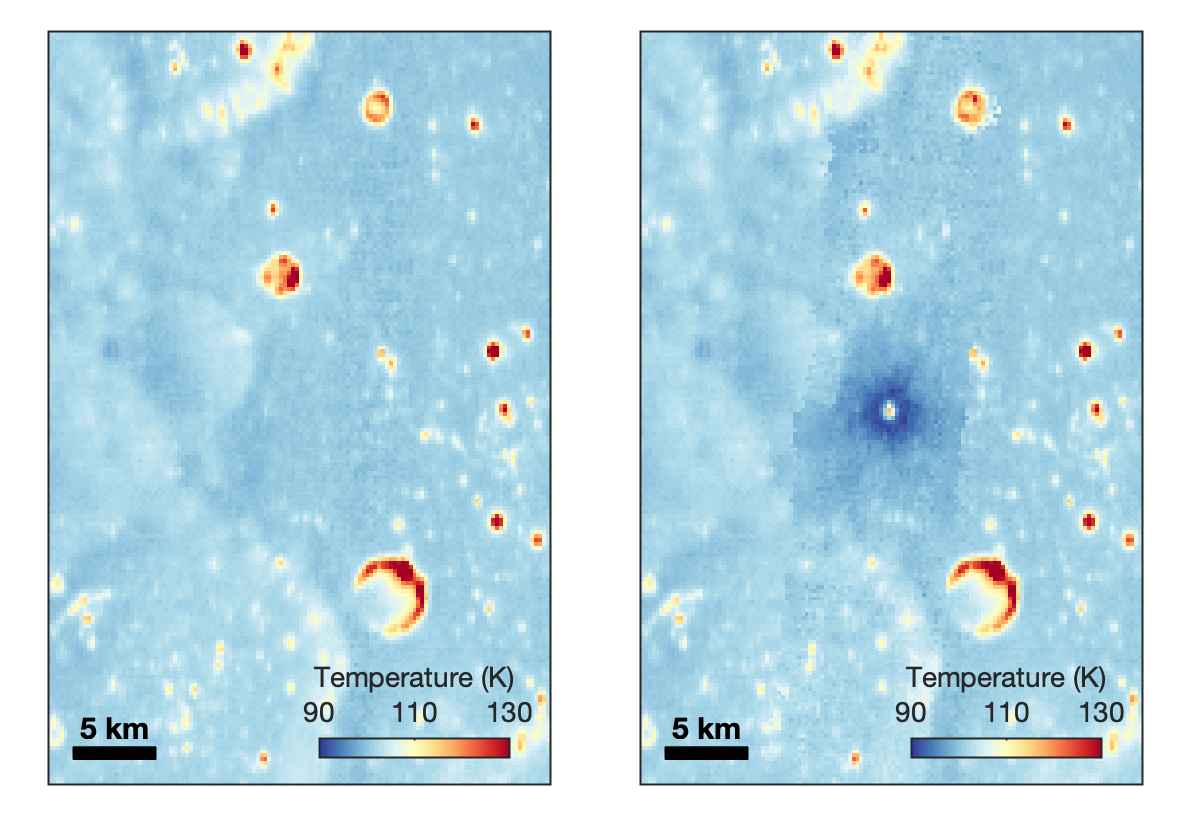
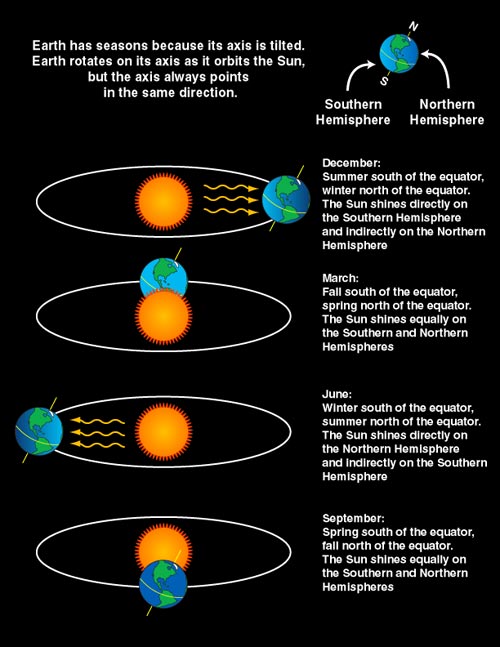



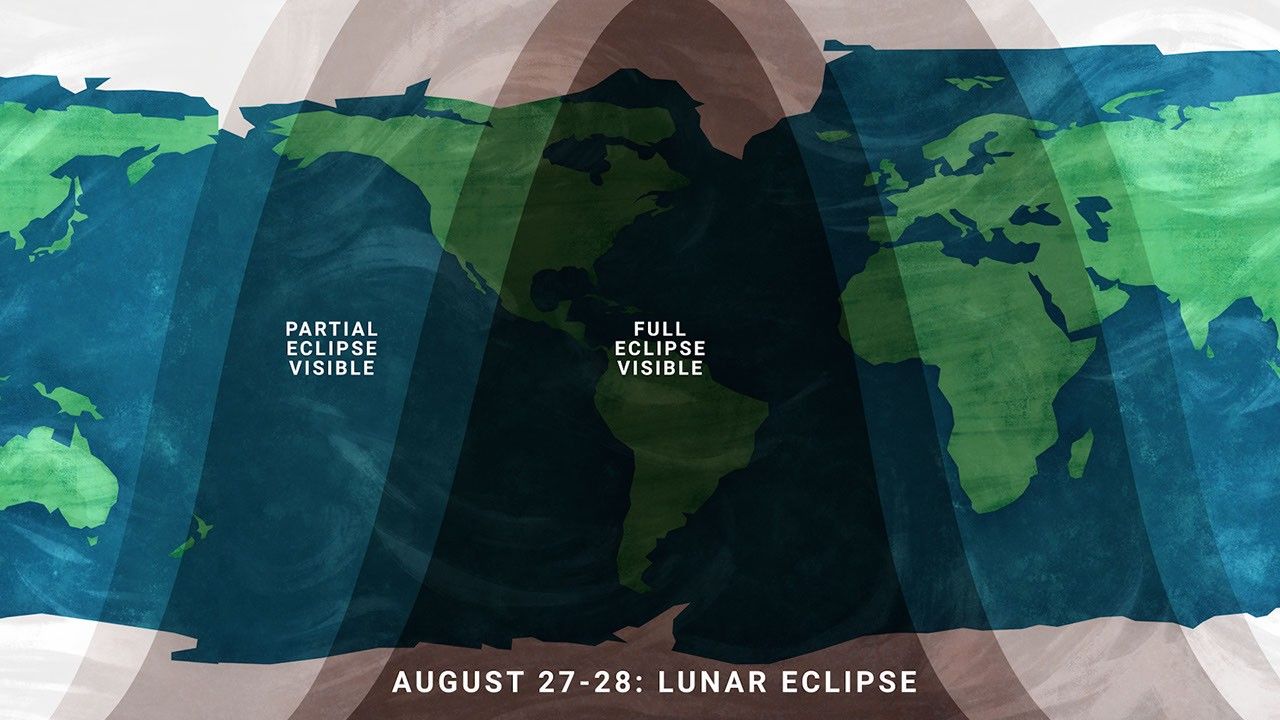




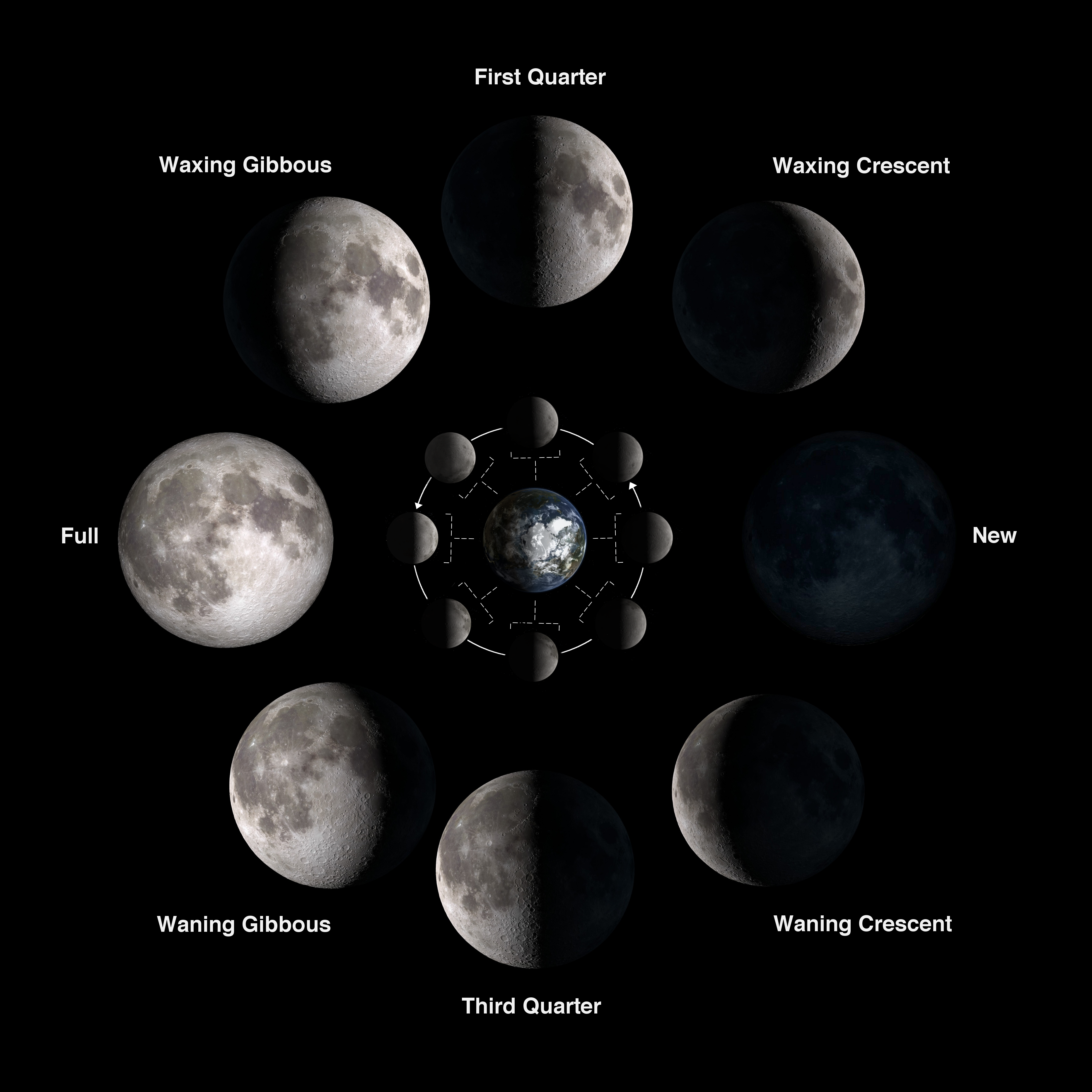




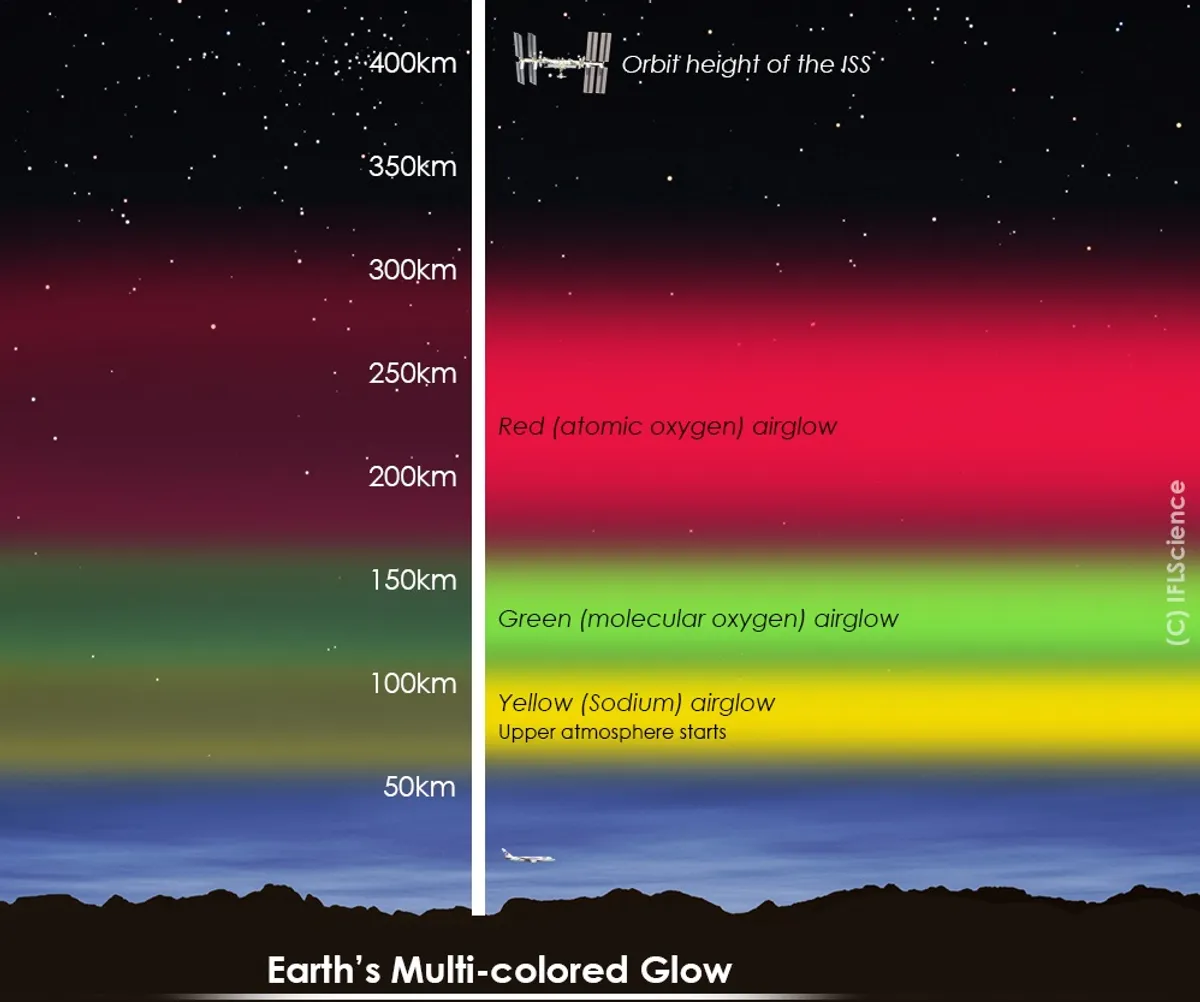




:max_bytes(150000):strip_icc():focal(999x0:1001x2):format(webp)/dog-eclipse-2000-ef0176770ff64e6b913f2af6e8273a24.jpg)





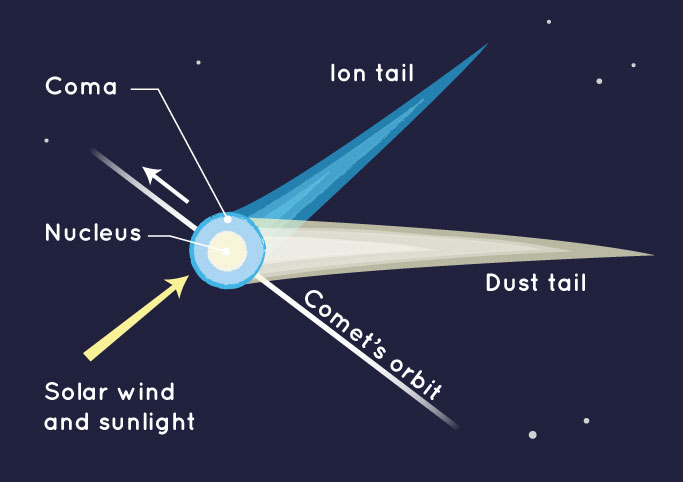








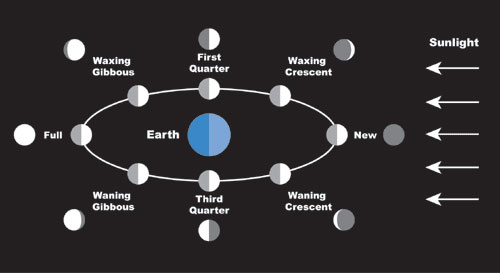







.jpg)

















,_published_1799,_NGA_7459.jpg)