Astronomy Picture of the Day
Discover the cosmos! Each day a different image or photograph of our fascinating universe is featured, along with a brief explanation written by a professional astronomer.
2026 August 12
Discover the cosmos! Each day a different image or photograph of our fascinating universe is featured, along with a brief explanation written by a professional astronomer.
2026 August 12
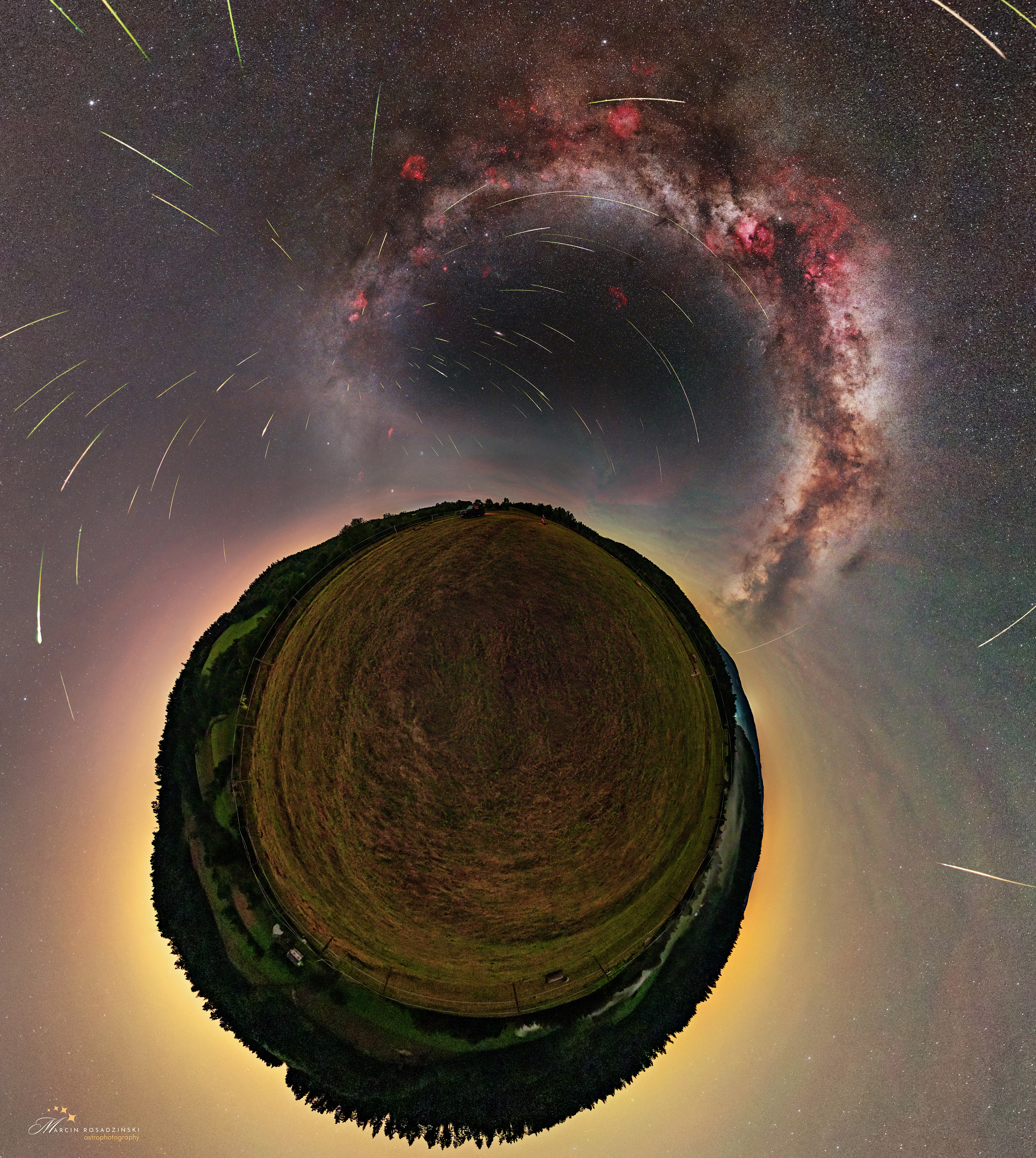
Explanation: It looks like a view from the Litte Prince's planet. The featured image is a throwback to the 2025 Perseid meteor shower, surrounded in this projection by the Bieszczady Mountains in Poland. Visible in the sky is the arch of the Milky Way, along with several Nebulas in red and over a hundred meteors pointing to the radiant. The Perseids are easily visible from the Northern hemisphere (winter meteor showers are less popular for a good reason). This year they are expected to offer an even more dazzling spectacle than usual, because the peak coincides with a new moon. The 2026 Perseid meteor shower will peak tonight with as many as 50-100 meteors per hour, when the Earth's path crosses through debris left behind by Comet Swift-Tuttle. Typically the best times for seeing the meteors are between midnight and pre-dawn. You won't need binoculars to see the meteors, but a lawn chair and a dark sky location help.
Authors & editors:
Robert Nemiroff
(MTU) &
Jerry Bonnell (UMCP)
NASA Official: Amber Straughn
Specific rights apply.
NASA Web Privacy,
Accessibility,
Notices;
A service of:
ASD at
NASA /
GSFC,
NASA Science Activation
& Michigan Tech. U.